
Home › Guides › Water treatment
Activated Carbon Filters: What They Remove and Why RO Systems Need Them

- Removes chlorine, taste and odour
- Protects RO membranes from chlorine
- Does not remove salts, hardness or germs
- Replace on schedule: spent carbon stops working
On this page
What Activated Carbon Removes
| Removes or reduces | Does not remove |
|---|---|
| Chlorine and its taste and smell | Dissolved salts (TDS) |
| Many musty and earthy tastes and odours | Hardness (calcium and magnesium) |
| Some organic chemicals | Bacteria and viruses |
| Fluoride (needs special media) |
Carbon Block vs Granular Carbon
Carbon block cartridges are compressed carbon that also filter fine particles; they suit under-sink and point-of-use systems. Granular carbon is loaded into large FRP vessels for whole-house and commercial plants and can be backwashed.
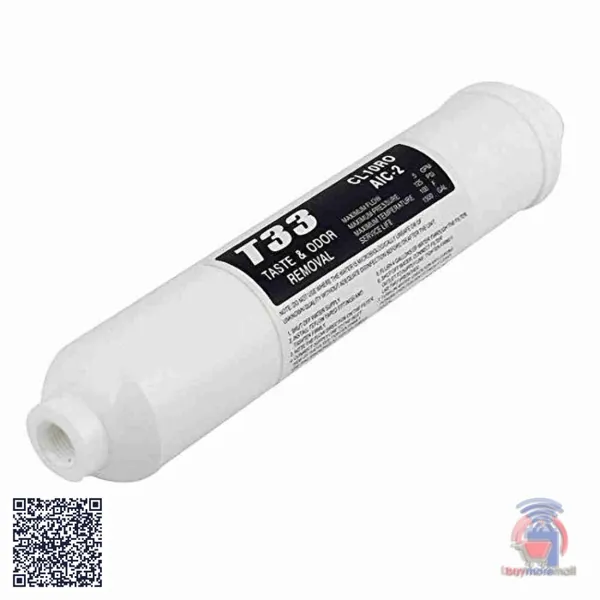 Taste & Odour Removal CartridgeKSh 1,200
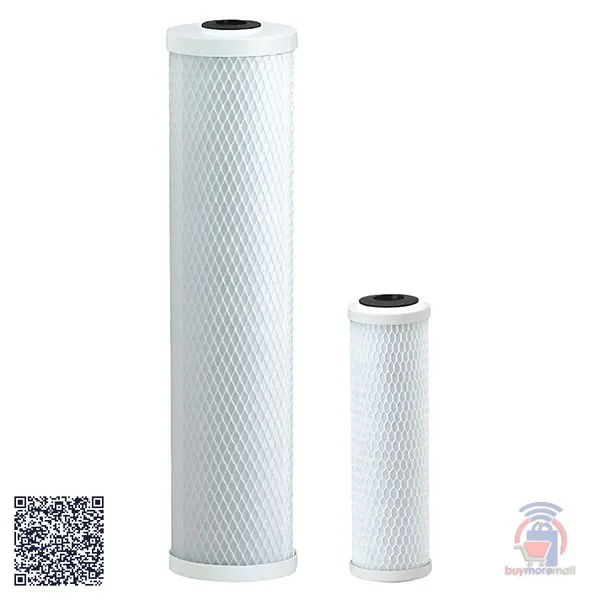 Carbon Block Coconut Shell Big Blue Cartridges (1um)KSh 1,300
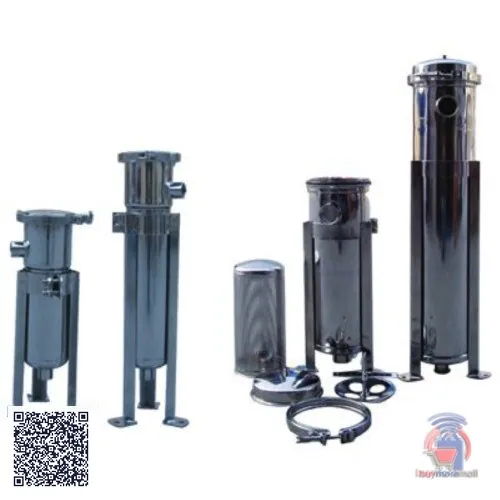 H-TECH Filter Cartridge and Replacement Filter RangeKSh 17,400
| Product | Price |
|---|---|
| Taste & Odour Removal Cartridge | KSh 1,200 |
| Carbon Block Coconut Shell Big Blue Cartridges (1um) | KSh 1,300 |
| H-TECH Filter Cartridge and Replacement Filter Range | KSh 17,400 |
Current listed prices incl. VAT (updated 4 October 2026).
Carbon vessels for commercial plants
| Product | Price |
|---|---|
| 817 FRP Tanks and PP Filters | KSh 9,200 |
| 820 FRP Tanks and PP Filters | KSh 9,800 |
| 948 FRP Tanks and PP Filters | KSh 13,500 |
| Frp filter tank | KSh 24,000 |
Current listed prices incl. VAT (updated 4 October 2026).
Why RO Plants Need Carbon
Chlorine in municipal water attacks most RO membranes. A carbon stage before the membrane removes it and makes the membrane last. See RO maintenance.
When to Replace Carbon
- The chlorine taste or smell comes back.
- On the schedule your installer set: carbon gets used up even if it looks clean.
- If the cartridge has clogged with sediment (put a sediment filter before it: micron ratings).
Watch: RO purifiers and water ATMs
Frequently asked questions
What does an activated carbon filter remove?
Chlorine, many tastes and odours and some organic chemicals; not salts, hardness or germs.
Does carbon remove bacteria?
No, use UV, UF or RO for germs.
Why is carbon used before RO?
It removes chlorine, which damages RO membranes.
How often should a carbon filter be changed?
On the installer's schedule or when chlorine taste returns; carbon gets used up even if it looks clean.