Home › Guides › Workshop and plant
Choosing an Air Compressor: Oil-Free vs Oil-Lubricated, Size and Maintenance
Quick answer: Choose an air compressor by the air flow (litres per minute or CFM) your tools need plus about 25–30% spare, the pressure (most tools need 6–8 bar), tank size (bigger smooths demand), and type: oil-free for clean air (food, medical, dental, light use) and oil-lubricated for heavy workshop duty and longer life. Screw compressors suit continuous industrial use.
Key facts
- Size by air flow + 25–30%
- 6–8 bar for most tools
- Oil-free = clean air
- Oil-lubricated = heavy duty
On this page
Oil-Free vs Oil-Lubricated Compressors
| Oil-free | Oil-lubricated | |
|---|---|---|
| Air quality | No oil carry-over; good for food, dental, labs, packaging | Needs filters where clean air matters |
| Noise | Often louder (piston types) | Often quieter |
| Life and duty | Lighter duty cycles | Longer life, heavier duty |
| Maintenance | No oil changes | Oil level and changes |
How Big a Compressor Do You Need?
- List the tools that run at the same time and their air use (litres/min or CFM) and pressure.
- Add them up and add about 25–30% for leaks and growth.
- Choose a compressor whose free air delivery (not just displacement) meets that figure.
- Choose a tank that smooths peaks: spray painting and blasting need bigger tanks.
- Check power: single-phase for small units, three-phase for larger ones.
Typical Uses
- Tyre inflation and garage tools.
- Spray painting (needs clean, dry air).
- Packaging and filling machines (pneumatic cylinders).
- Dental and lab equipment (oil-free).
- Cleaning and blowing down machines.
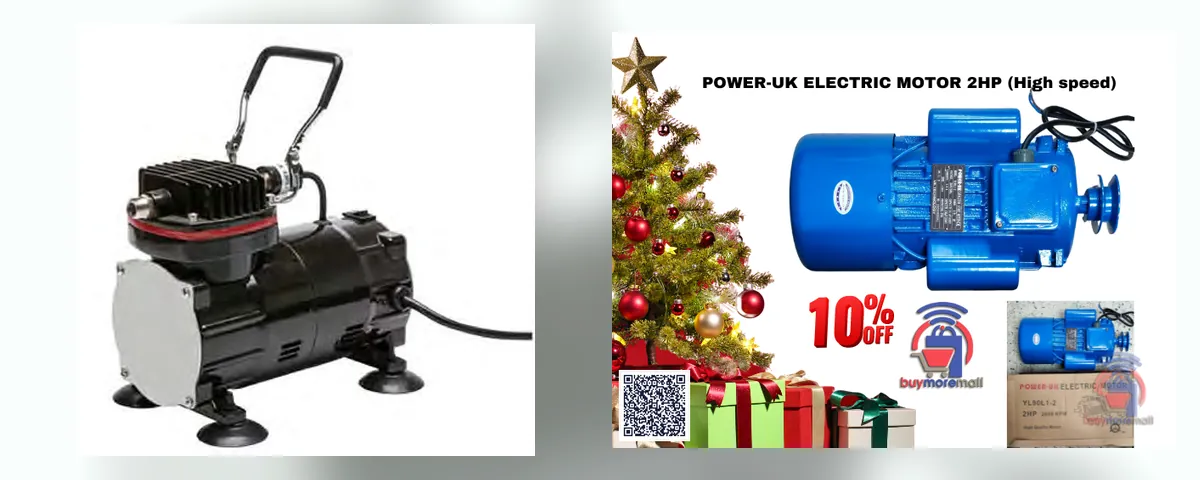
H-TECH stocks air compressors including mini oil-free piston units (price on request).
Maintenance
- Drain the tank of water daily or fit an auto-drain.
- Clean or replace the intake filter.
- Check oil level and change on schedule (oiled types).
- Fix air leaks: they waste power all day.
- Fit a dryer and filters where air must be clean and dry.
Mistakes to Avoid
- Buying by tank size instead of air delivery.
- Undersizing, so the compressor never rests and overheats.
- Oiled air for food or spray work without filters.
- Never draining the tank.
Frequently asked questions
Which is better, oil-free or oil-lubricated air compressor?
Oil-free gives clean air with less maintenance; oil-lubricated suits heavier duty and usually lasts longer.
What size air compressor do I need?
Add the air flow of tools used together, add 25–30%, and match the compressor’s free air delivery and pressure.
How long do oil-free air compressors last?
It depends on duty cycle and care; they suit lighter or intermittent duty better than continuous heavy use.
How do I maintain an air compressor?
Drain the tank, clean the intake filter, check oil (oiled types) and fix leaks.
What pressure do air tools need?
Most air tools need about 6–8 bar; check each tool.