
Home › Guides › Stainless fabrication
How to Clean and Care for Stainless Steel Kitchen and Dairy Equipment
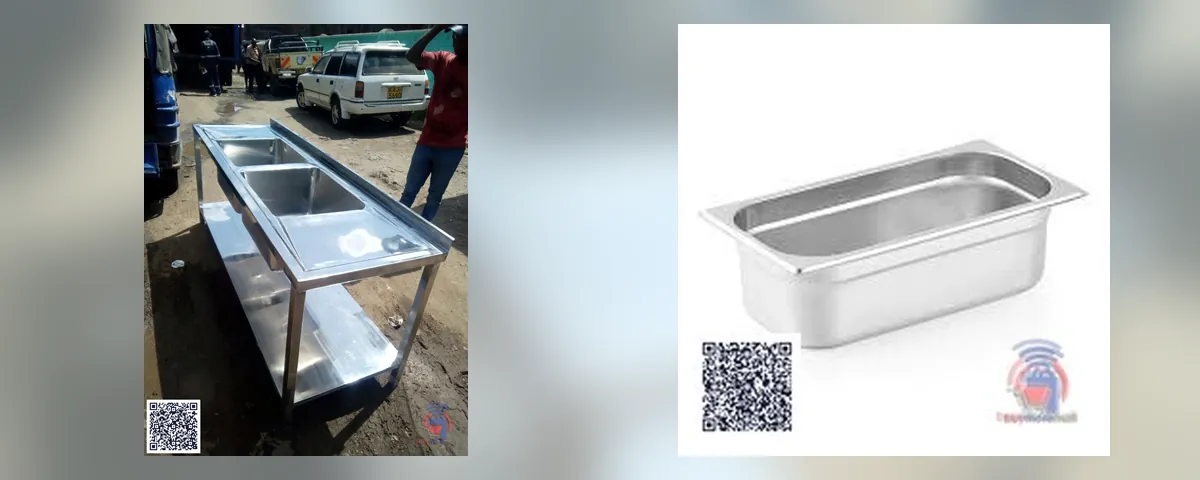
- Mild detergent, soft cloth
- Wipe along the grain
- Rinse and dry
- No steel wool, no neat bleach
On this page
Why Stainless Steel Stays Clean (and When It Does Not)
Stainless steel resists rust because of a thin chromium oxide film on its surface. Anything that scratches or chemically attacks that film (steel wool, chlorides from bleach or salt, iron particles) lets rust spots and stains form. Cleaning the right way keeps the film intact.
Daily Cleaning Routine
- Scrape off food and rinse with warm water.
- Wash with warm water and a mild detergent using a soft cloth or nylon pad, wiping along the grain lines.
- Rinse with clean water to remove detergent.
- Sanitise food-contact surfaces with a food-safe sanitiser, following the dilution on the label.
- Dry with a clean cloth to avoid water spots.
Do’s and Don’ts
| Do | Don’t |
|---|---|
| Use mild detergent and warm water | Use steel wool or wire brushes |
| Wipe along the grain | Scrub in circles on brushed finishes |
| Rinse and dry after cleaning | Leave bleach, salt or vinegar on the surface |
| Use diluted, food-safe sanitisers | Use undiluted chlorine bleach |
| Keep carbon steel tools separate | Rest cast-iron pots or steel tools on stainless for long |
Dairy Equipment: Milk ATMs, Chillers and Pasteurizers
Milk equipment needs a strict routine: rinse milk residues with lukewarm water (hot water bakes milk proteins onto steel), wash with a dairy detergent, rinse, use an acid cleaner periodically to remove milkstone, and sanitise before the next fill. Step-by-step guides: how to clean a milk ATM, milk chiller cleaning and pasteurizer cleaning.
Removing Rust Spots and Stains
- Light rust spots: a stainless steel cleaner or a paste of baking soda and water, wiped along the grain, then rinsed.
- Water spots and limescale: diluted vinegar, then rinse well and dry.
- Heat tint near welds: pickling paste by a fabricator, followed by passivation.
- Persistent rust: usually iron contamination or the wrong grade (201 in a wet, salty area); passivation or upgrading to 304 solves it.
Equipment We Make and Supply
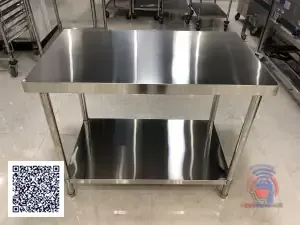 2 by 4 stainless steel working table with rackKSh 25,000
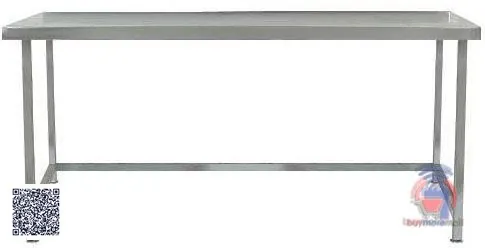 2 by 4 stainlss steel working table without rackKSh 20,000
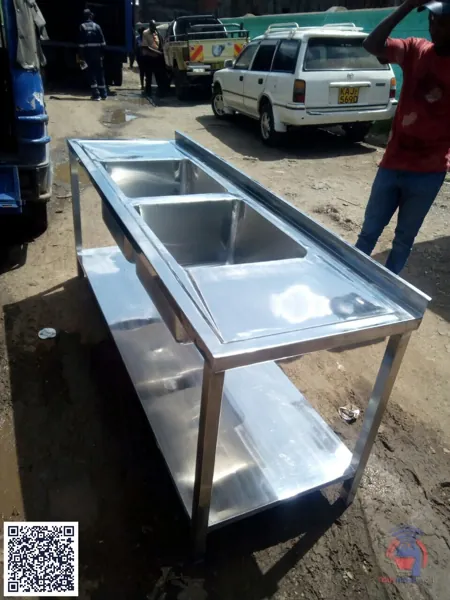 Double sink with tableKSh 68,000
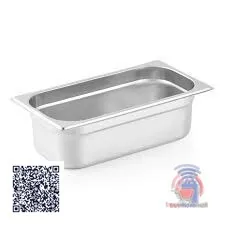 Stainless Steel kitchen Inserts(150 1/2)KSh 3,500
 50 Liters Milk vending machine (portable)KSh 100,000
| Product | Price |
|---|---|
| 2 by 4 stainless steel working table with rack | KSh 25,000 |
| 2 by 4 stainlss steel working table without rack | KSh 20,000 |
| Double sink with table | KSh 68,000 |
| Stainless Steel kitchen Inserts(150 1/2) | KSh 3,500 |
| 50 Liters Milk vending machine (portable) | KSh 100,000 |
Current listed prices incl. VAT (updated 12 October 2026).
Choosing new equipment? Grade matters for easy cleaning: 201 vs 304 vs 316.
Watch: Fabrication and components
Frequently asked questions
What is the best way to clean stainless steel?
Warm water and mild detergent with a soft cloth, along the grain, then rinse and dry.
Can I use bleach on stainless steel?
Avoid undiluted bleach; chlorides cause pitting and rust spots. Use food-safe sanitisers at the correct dilution.
Why is my stainless steel rusting?
Usually scratches from steel wool, chlorides from bleach or salt, iron contamination or a lower grade in wet use.
How do I remove rust spots from stainless steel?
Use a stainless cleaner or baking soda paste along the grain, rinse and dry; passivate if it returns.
How do I clean milk equipment?
Rinse with lukewarm water, wash with dairy detergent, acid-clean periodically and sanitise before use.