
Home › Guides › Water treatment
How to Test Your Water: Home Meters and Laboratory Tests
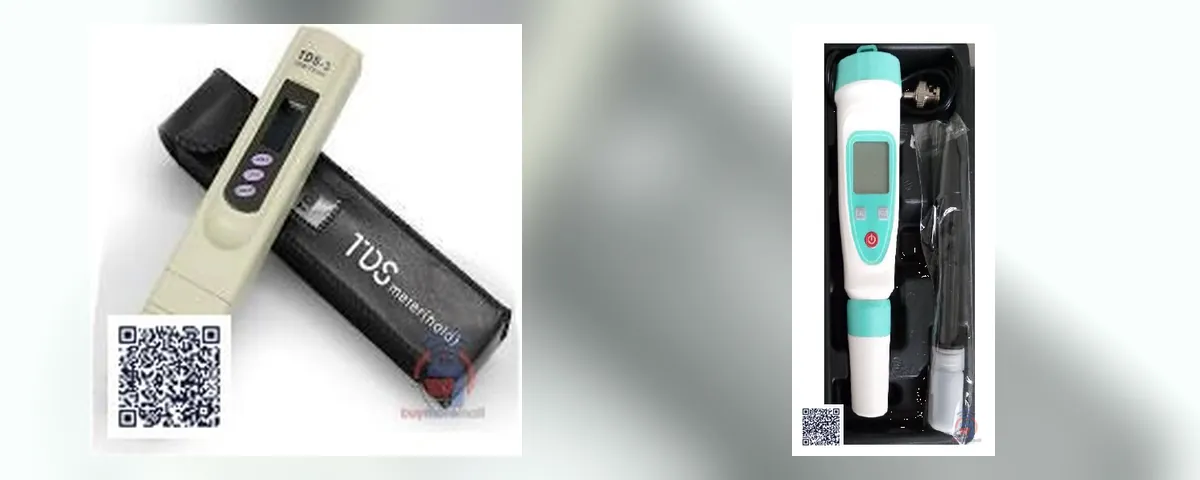
- Home meters: TDS, pH, chlorine
- Lab only: bacteria, fluoride, iron, hardness, metals
- Lab-test a new source before choosing treatment
- Calibrate pH meters regularly
On this page
What You Can Test Yourself
| Test | Tool | What it tells you |
|---|---|---|
| TDS (dissolved solids) | TDS meter | How salty the water is; whether RO is working |
| pH | pH meter | Acidic or alkaline |
| Free chlorine | Chlorine test kit | Whether disinfection is working |
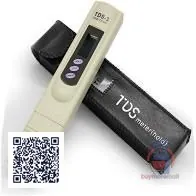
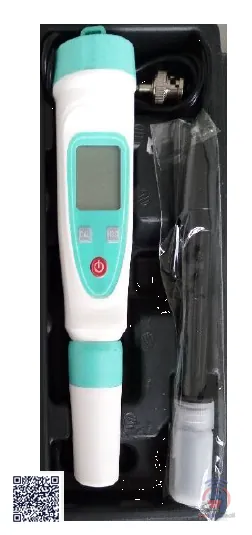
| Product | Price |
|---|---|
| TDS Handheld Meter | KSh 6,500 |
| pH Handheld Meter | KSh 4,500 |
Current listed prices incl. VAT (updated 4 October 2026).
How to Use a TDS Meter
- Remove the cap and rinse the tip in the water sample.
- Dip it to the line and stir gently.
- Wait for the reading to settle and note it in ppm.
- Rinse and dry it after use.
What the numbers mean: what TDS is safe to drink.
How to Use a pH Meter
Calibrate it with buffer solutions as the maker instructs, rinse the probe, dip it in the sample and wait for a stable reading. Keep the probe moist in storage solution. See pH of drinking water.
What Needs a Laboratory
- Bacteria (E. coli and coliforms): the most important safety test.
- Fluoride, iron, manganese and nitrate.
- Hardness, alkalinity and heavy metals.
Water labs include the Water Resources Authority (WRA) and accredited private labs; packaged water for sale must meet KEBS standards. Take samples in the bottles the lab provides and deliver them quickly.
Then Choose Treatment
Bring the lab report to us and we match the treatment to it: how to read a water test report.
Watch: RO purifiers and water ATMs
Frequently asked questions
How can I test my water at home?
Use a TDS meter for dissolved salts, a pH meter for acidity, and a chlorine kit for disinfection.
Can a TDS meter detect bacteria?
No, bacteria need a laboratory test.
Where can I test water in Kenya?
At water laboratories such as WRA labs and accredited private labs.
What is a safe pH for drinking water?
Kenyan drinking-water standards use a range of about 6.5 to 8.5.
How much is a TDS meter?
Our TDS handheld meter is KSh 6,500.