
Home › Guides › FRP tanks & filters
Manganese and Nitrate in Borehole Water: How to Tell, Why It Matters and How to Remove Them
- Manganese = black stains, metallic taste
- Nitrate is invisible: test it
- Boiling concentrates nitrate
- RO removes both
On this page
Manganese: Signs and Risks
- Black or dark brown stains on toilets, sinks, tiles and white clothes.
- Black slime in tanks and pipes.
- Bitter, metallic taste in tea and drinking water.
Manganese often comes with iron in borehole water. The World Health Organization’s current guideline puts a provisional health-based value of about 0.08 mg/L for manganese, and staining can start at lower levels. Iron and manganese are treated together: see how to remove iron from borehole water.
Nitrate: The Invisible Problem
Nitrate enters groundwater from fertilisers, manure, septic tanks and pit latrines, so shallow wells and boreholes near farms and dense settlements are most at risk. The WHO guideline value is 50 mg/L (as nitrate). High nitrate is dangerous for bottle-fed babies (it reduces the blood’s ability to carry oxygen), so families with infants should test first.
How to Test
Take a sample to an accredited water lab and ask for iron, manganese, nitrate, hardness, TDS and bacteria. Our guide how to read a water test report explains the results, and how to test water quality covers sampling.
How to Remove Manganese
- Oxidise the manganese (with chlorine, aeration or a suitable oxidant) so it becomes a solid.
- Filter it out in a pressure vessel with a manganese-removal medium, backwashed regularly.
- Polish with a carbon filter to remove leftover taste and oxidant.
- Or use RO after pre-treatment when you also need to remove salts.
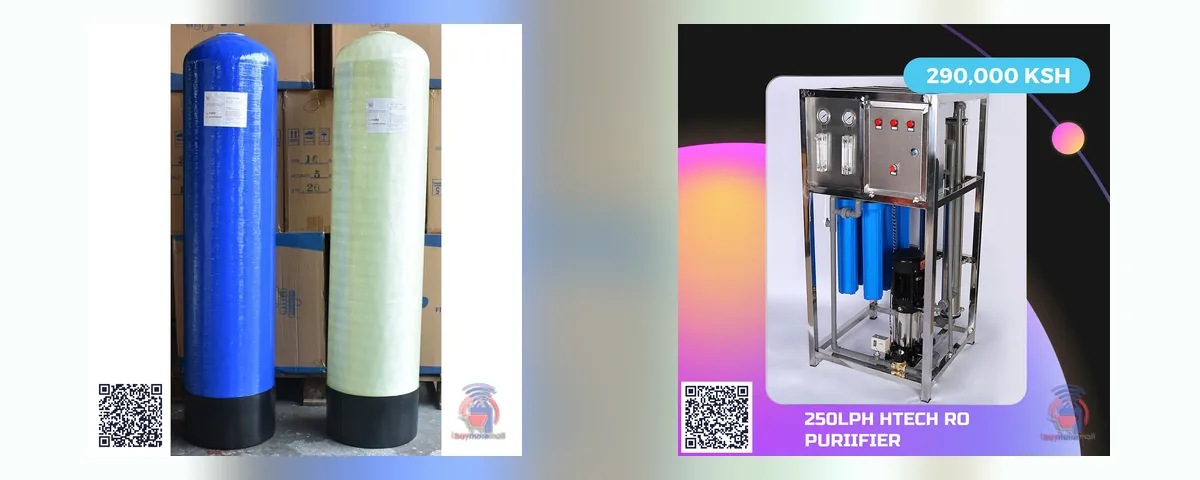
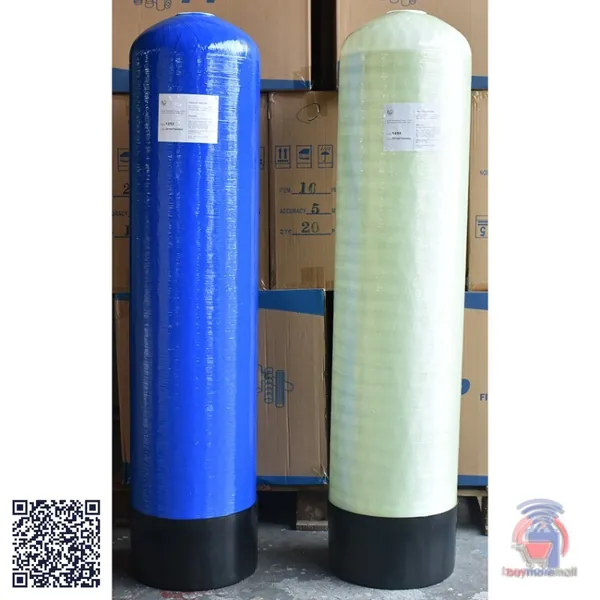 Frp filter tankKSh 24,000
 820 frp pressure vesselKSh 14,000
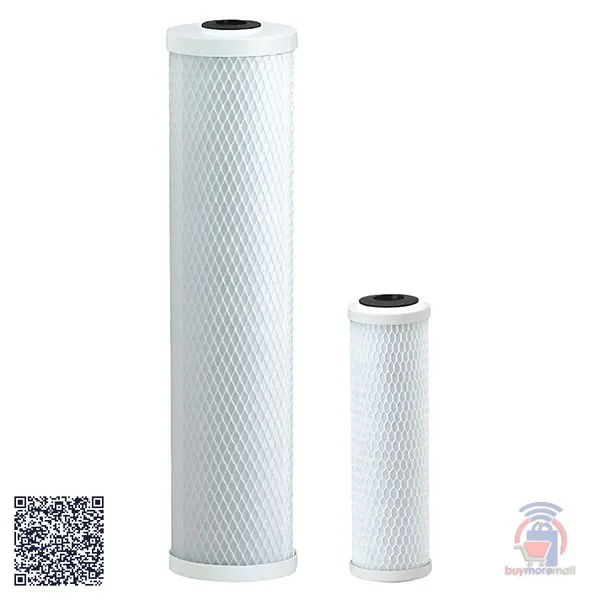 Carbon Block Coconut Shell Big Blue Cartridges (1um)KSh 1,300
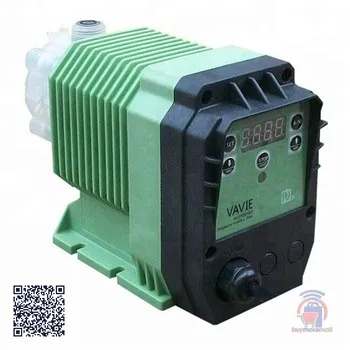 Dosing Pump 5l/hKSh 28,000
| Product | Price |
|---|---|
| Frp filter tank | KSh 24,000 |
| 820 frp pressure vessel | KSh 14,000 |
| Carbon Block Coconut Shell Big Blue Cartridges (1um) | KSh 1,300 |
| Dosing Pump 5l/h | KSh 28,000 |
Current listed prices incl. VAT (updated 12 October 2026).
Manganese needs a higher pH and stronger oxidation than iron, so the filter must be designed for it. See how to backwash a filter.
How to Remove Nitrate
- Reverse osmosis: removes most nitrate along with salts; the usual choice for drinking water.
- Ion exchange with nitrate-selective resin for larger flows (needs regeneration with salt).
- Do not boil high-nitrate water: boiling evaporates water and concentrates the nitrate.
- Fix the source where possible: move pit latrines and manure heaps away from wells.
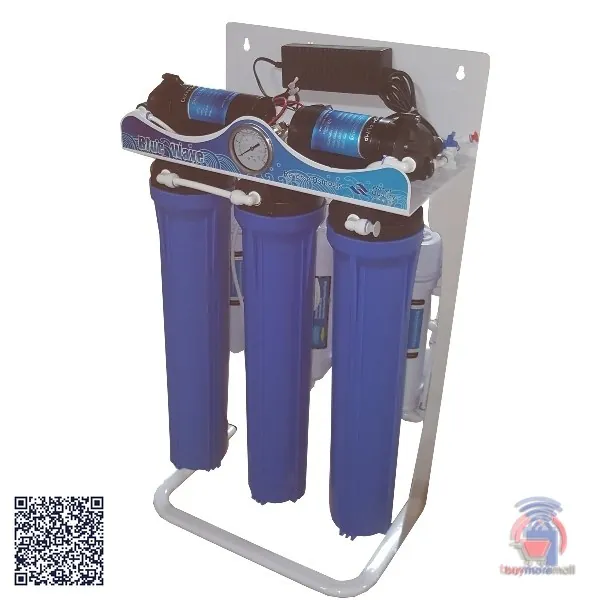 RO-400G-D02B 5-Stage RO SystemKSh 98,000
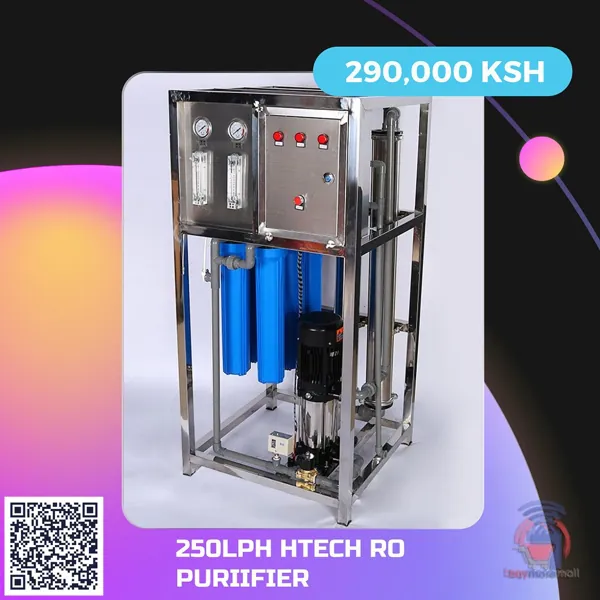 Htech 250LPH RO PURIFIERKSh 290,000
 Htech 500lph Ro water purifierKSh 380,000
| Product | Price |
|---|---|
| RO-400G-D02B 5-Stage RO System | KSh 98,000 |
| Htech 250LPH RO PURIFIER | KSh 290,000 |
| Htech 500lph Ro water purifier | KSh 380,000 |
Current listed prices incl. VAT (updated 12 October 2026).
Which System for My Home or Business?
| Problem | Typical solution |
|---|---|
| Manganese stains only | Oxidation + manganese filter + carbon |
| Manganese + salty water | Pre-treatment + RO |
| Nitrate in drinking water | RO for drinking and cooking water |
| Nitrate in a whole building supply | Ion exchange or a larger RO plant |
Watch: RO purifiers and water ATMs
Frequently asked questions
What causes black stains from borehole water?
Usually manganese, often together with iron.
How do I remove manganese from water?
Oxidise it and filter it on a suitable medium, or use RO after pre-treatment.
What is a safe nitrate level in drinking water?
The WHO guideline value is 50 mg/L as nitrate.
Does boiling remove nitrate?
No. Boiling concentrates nitrate.
Does RO remove nitrate?
Yes, RO removes most nitrate along with other dissolved salts.