Home › Guides › Power protection
Voltage Stabilizers: When You Need One, How to Size It and Stabilizer vs AVS
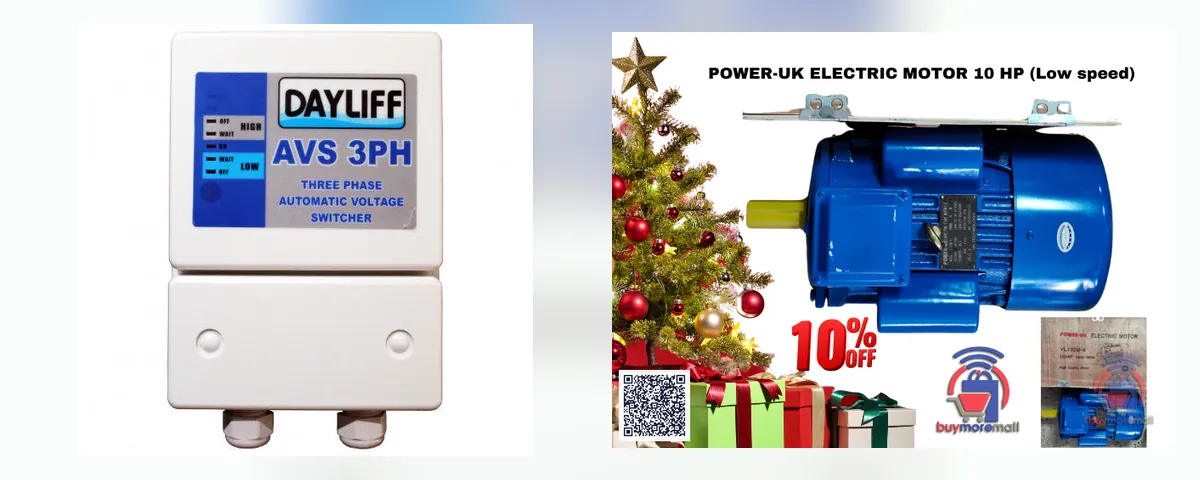
- Stabilizer corrects, AVS cuts off
- Size in kVA + 25–30%
- Motors need extra margin
- Three-phase for three-phase loads
On this page
Stabilizer vs AVS
| Voltage stabilizer | AVS (automatic voltage switcher) | |
|---|---|---|
| What it does | Raises or lowers voltage to a steady output | Cuts power when voltage is unsafe, reconnects after a delay |
| Equipment keeps running? | Yes, within its range | No, it switches off |
| Best for | Areas with frequent low/high voltage; machines that must run | Fridges, freezers, TVs, simple surge and voltage protection |
| Cost | Higher | Lower |
More on switchers: AVS guide.
How to Size a Stabilizer
- List every device it will power and its watts (or volts × amps).
- Add them up and convert to kVA (kVA ≈ kW ÷ power factor; use about 0.8 if unknown).
- Add about 25–30% margin.
- For motors (pumps, compressors), allow for starting current: size up more or start motors separately.
- Match phases: single-phase for single-phase loads, three-phase stabilizer for three-phase machines.
Servo vs Relay Stabilizers
| Type | Pros | Cons |
|---|---|---|
| Relay | Cheaper, compact | Corrects in steps; less precise |
| Servo | Smooth, precise correction; good for machines | More costly; moving parts need service |
| Static (electronic) | Very fast, no moving parts | Higher cost |
Voltage Protection at H-TECH
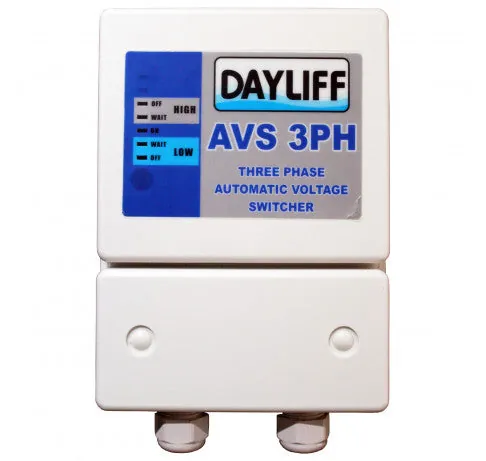
| Product | Price |
|---|---|
| DAYLIFF Automatic Voltage Switcher 3P | KSh 16,310 |
Current listed prices incl. VAT (updated 18 November 2026).
Safety: cables, breakers, earthing and connections must be designed, installed and tested by a qualified electrician to the wiring regulations. These figures help you plan and ask the right questions; they do not replace an electrical design.
Mistakes to Avoid
- Sizing for running watts only and ignoring motor starts.
- Using a stabilizer where the real problem is a loose neutral or bad wiring.
- Single-phase stabilizer on one phase of a three-phase machine.
- No earthing.
Frequently asked questions
What is the difference between a stabilizer and an AVS?
A stabilizer corrects voltage so equipment keeps running; an AVS disconnects equipment when voltage is unsafe.
What size voltage stabilizer do I need?
Add your loads in kVA, add 25–30%, and size up further for motors.
Do I need a stabilizer for my fridge?
An AVS is usually enough for a fridge; use a stabilizer if voltage is often low and the fridge must keep running.
Do I need a three-phase stabilizer?
Yes for three-phase machines; single-phase loads use single-phase stabilizers.
Can a stabilizer protect against surges?
Many include surge protection, but check the specification; lightning protection is a separate design.