
How to Treat Salty Borehole Water in Kenya (and When You Need Desalination)
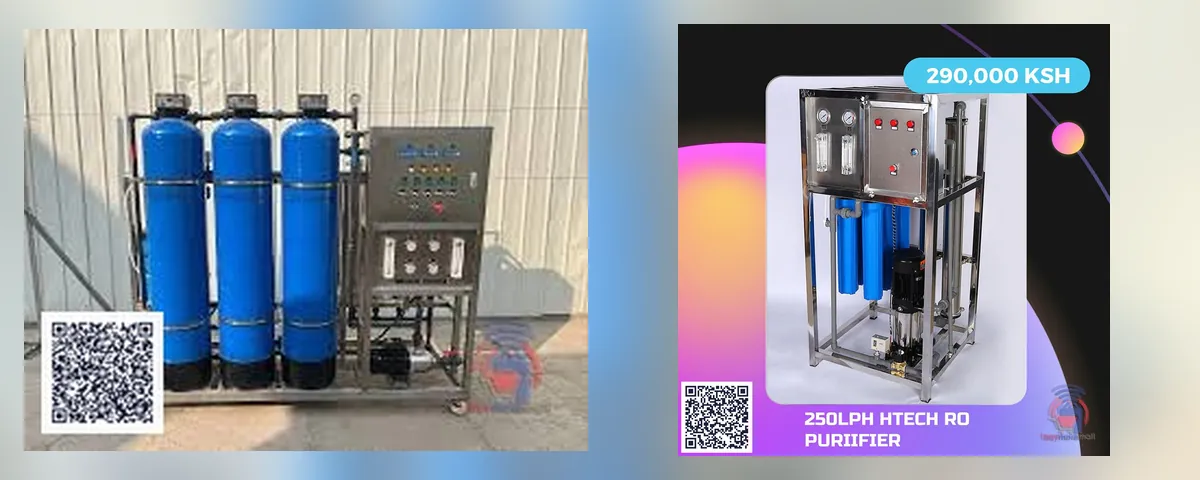
- Salt is removed by RO only
- Brackish borehole = standard RO
- Sea water = high-pressure SWRO
- Test TDS, hardness and iron first
On this page
Why Is My Borehole Water Salty?
Water picks up dissolved minerals (sodium, chloride, calcium, sulphate) from the rocks it passes through. In parts of Kenya’s coast, North Eastern, Turkana, Kajiado and the Rift Valley, groundwater can be brackish. Boiling, chlorine, UV and ordinary filters do not remove salt; boiling actually concentrates it.
Brackish vs Sea Water
| Source | Typical TDS | Treatment |
|---|---|---|
| Fresh borehole / municipal | Below about 1,000 ppm | Filters, UF or RO for taste |
| Brackish borehole | About 1,000–10,000 ppm | Brackish-water RO (low-pressure membranes) |
| Sea water | About 35,000 ppm | Sea-water RO with high-pressure pump and membranes |
Measure TDS with a meter and get a full lab test before you buy: how to read a water test report.
How an RO Desalination Plant Works
- Pre-treatment: sediment, iron removal or media filters and carbon protect the membranes.
- Antiscalant dosing stops minerals scaling the membranes (why antiscalant).
- High-pressure pump pushes water through the RO membranes.
- Product water (low TDS) goes to storage; reject water (concentrated salt) goes to drain or other uses.
- Post-treatment: UV disinfection and, if wanted, remineralisation for taste.
RO Plants on H-TECH’s Listings
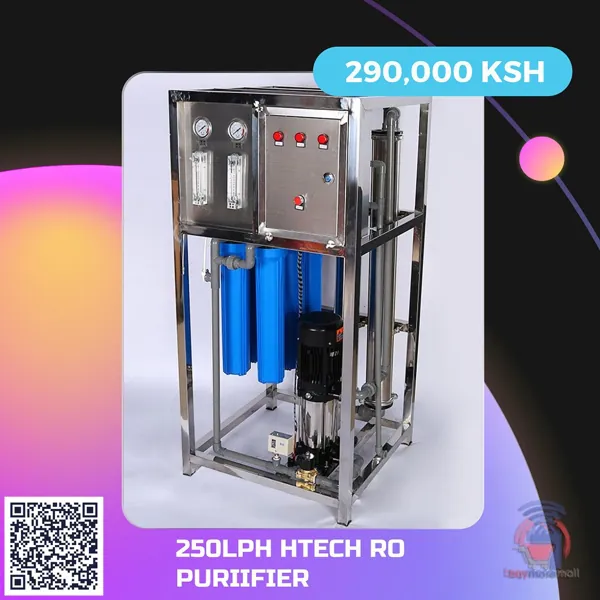 Htech 250LPH RO PURIFIERKSh 290,000
 Htech 500lph Ro water purifierKSh 380,000
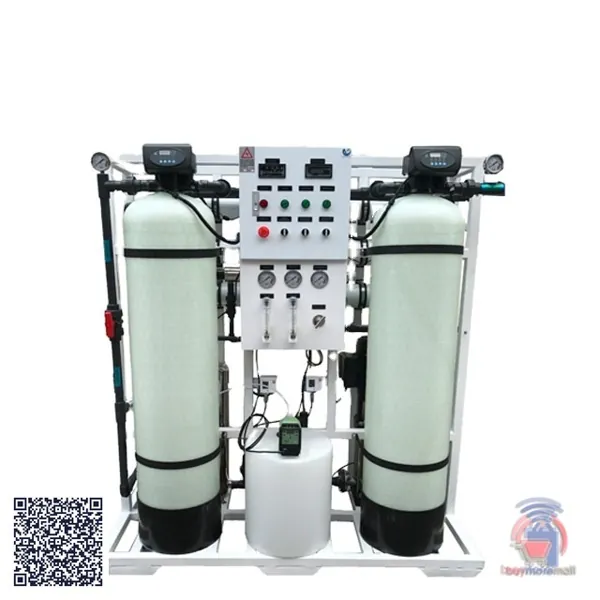 Htech 750lph Ro purifier plantKSh 500,000
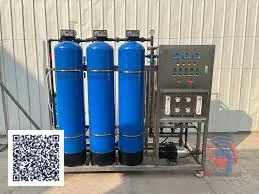 H-Tech 1000lph Industrial RO Water purifierKSh 929,775
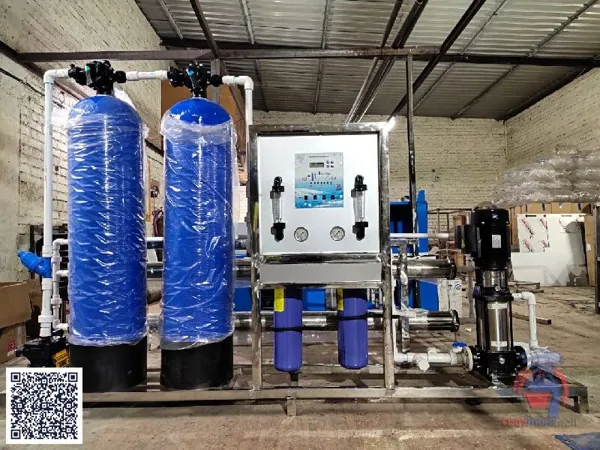 H-Tech 2000 LPH Industrial RO SystemKSh 1,331,550
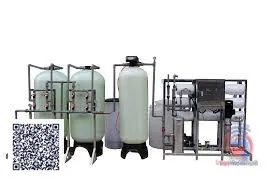 H-Tech 3000 LPH Industrial RO SystemKSh 1,694,700
| Product | Price |
|---|---|
| Htech 250LPH RO PURIFIER | KSh 290,000 |
| Htech 500lph Ro water purifier | KSh 380,000 |
| Htech 750lph Ro purifier plant | KSh 500,000 |
| H-Tech 1000lph Industrial RO Water purifier | KSh 929,775 |
| H-Tech 2000 LPH Industrial RO System | KSh 1,331,550 |
| H-Tech 3000 LPH Industrial RO System | KSh 1,694,700 |
Current listed prices incl. VAT (updated 11 October 2026).
Reject Water: Plan for It
A brackish RO plant sends a share of the feed water to reject. The saltier the feed, the lower the recovery. Plan a drain or a use for it: RO reject water uses. Very salty reject should not be poured onto crops or soil you want to farm.
Sizing Example
A school needs about 3,000 litres of drinking water a day from a borehole at about 2,500 ppm. Running 8–10 hours a day, a 500 LPH plant covers it with spare capacity. Use the RO plant size calculator and see the running cost with the cost per litre calculator.
Sea Water Projects
Coastal hotels, islands and fish processors sometimes need sea-water desalination. That needs high-pressure pumps, sea-water membranes and corrosion-resistant pipework. It is quoted per project: send us the source, the daily litres and a water test.
Watch: RO purifiers and water ATMs
Frequently asked questions
How do you remove salt from borehole water?
With reverse osmosis (RO). Boiling, chlorine, UV and normal filters do not remove salt.
What TDS is too salty to drink?
Water above about 1,000 ppm usually tastes salty; see our TDS guide for safe ranges.
How much is a desalination plant in Kenya?
Brackish-water RO plants on H-TECH’s listings start from about KSh 290,000; sea-water systems are quoted per project.
Can RO treat sea water?
Yes, but it needs a sea-water RO system with high-pressure pumps and special membranes.
What do I do with RO reject water?
Drain it safely or use it for cleaning and flushing; do not irrigate crops with very salty reject.