
High Speed vs Low Speed Electric Motors: RPM, Torque and the Right Choice
- 2-pole ≈ 2,900 rpm
- 4-pole ≈ 1,450 rpm
- Low speed = more torque
- Match the machine's rpm
On this page
How Motor Speed Is Set
An induction motor's speed depends on the supply frequency and the number of poles. Synchronous speed = 120 × frequency ÷ poles. At 50 Hz, that is 3,000 rpm for 2 poles and 1,500 rpm for 4 poles; under load the motor runs a little slower ("slip"), so nameplates show about 2,850–2,900 and 1,420–1,450 rpm.
High Speed vs Low Speed at a Glance
| High speed (2-pole) | Low speed (4-pole) | |
|---|---|---|
| Speed at 50 Hz | About 2,800–2,900 rpm | About 1,400–1,450 rpm |
| Torque for the same kW | Lower | About double |
| Size and weight | Smaller, lighter | Larger, heavier |
| Noise | Louder | Quieter |
| Typical uses | Centrifugal pumps, fans, blowers, some grinders | Posho mills (belt-driven), mixers, conveyors, compressors, chaff cutters |
Motors at H-TECH
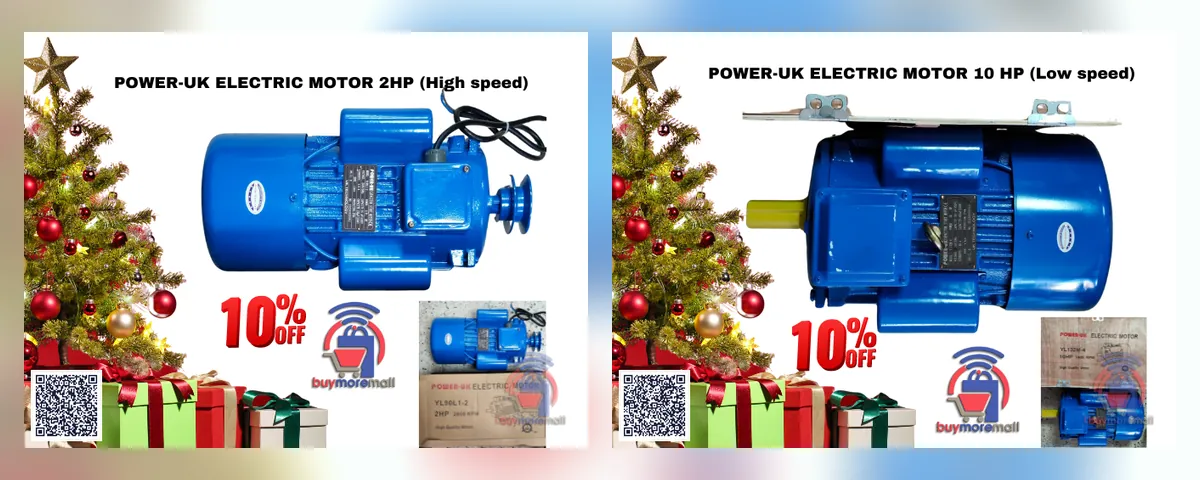
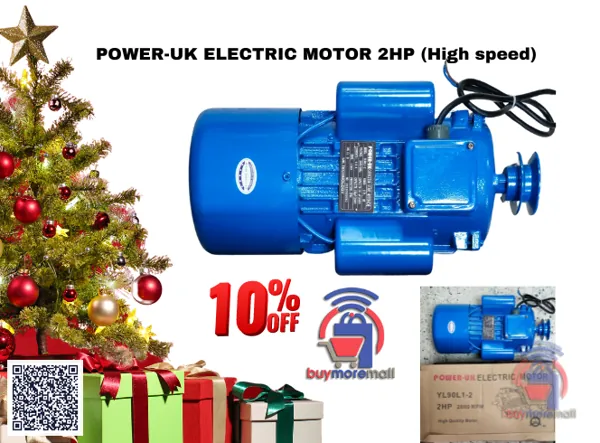 POWER-UK ELECTRIC MOTOR 2HP (High speed)KSh 21,000
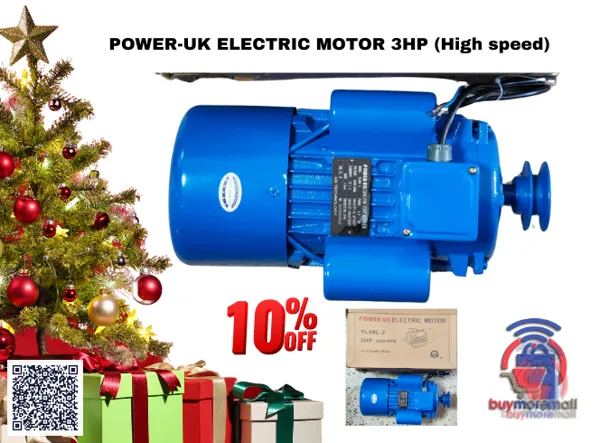 POWER-UK ELECTRIC MOTOR 3HP (High speed)KSh 24,000
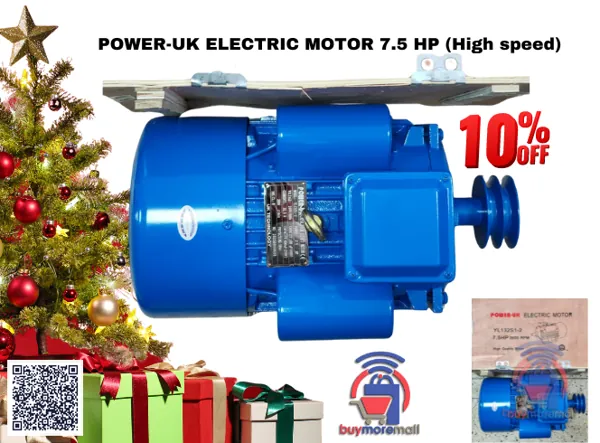 POWER-UK ELECTRIC MOTOR 7.5HP (High speed)KSh 39,000
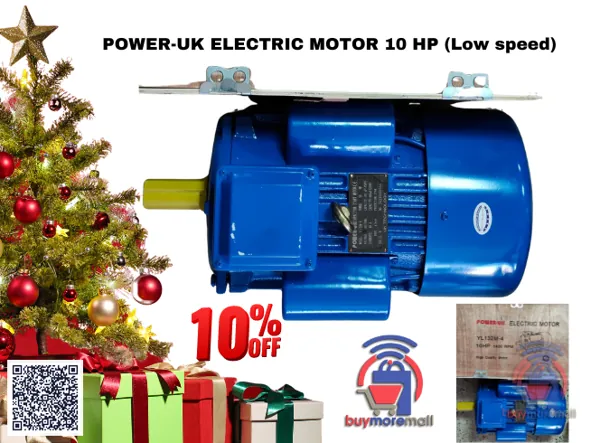 POWER-UK ELECTRIC MOTOR 10HP (Low speed)KSh 45,000
| Product | Price |
|---|---|
| POWER-UK ELECTRIC MOTOR 2HP (High speed) | KSh 21,000 |
| POWER-UK ELECTRIC MOTOR 3HP (High speed) | KSh 24,000 |
| POWER-UK ELECTRIC MOTOR 7.5HP (High speed) | KSh 39,000 |
| POWER-UK ELECTRIC MOTOR 10HP (Low speed) | KSh 45,000 |
Current listed prices incl. VAT (updated 10 November 2026).
How to Choose
- Check the machine's plate or manual for the required rpm and power.
- Belt drives can change speed with pulley sizes: machine rpm = motor rpm × motor pulley ÷ machine pulley.
- Heavy starts (full mill, loaded conveyor) favour low speed, high torque motors.
- Supply: check single-phase or three-phase; see single phase vs three phase motors.
- Power: see the motor price and HP guide.
Worked Example: Pulley Sizes
A machine needs about 700 rpm. With a 1,450 rpm motor, a pulley ratio of about 2:1 (e.g. 100 mm on the motor, 200 mm on the machine) gives roughly 725 rpm. With a 2,900 rpm motor you would need about 4:1, which is harder to fit and grips less, so the low speed motor is the better choice here.
Safety: electrical connections must be made by a qualified electrician, with correct earthing and a breaker sized for the equipment.
Frequently asked questions
What rpm is a high speed motor?
A 2-pole motor on 50 Hz, about 2,800–2,900 rpm.
What rpm is a low speed motor?
A 4-pole motor on 50 Hz, about 1,400–1,450 rpm.
Which motor is best for a posho mill?
Follow the mill maker's rpm; many belt-driven mills pair well with low speed, high torque motors.
Can I use a high speed motor instead of a low speed one?
Only if you change pulleys to get the right machine speed and the motor has enough torque.
Does a low speed motor use less electricity?
Not by itself; power use depends on the load. It gives more torque for the same kW.