
Home › Guides › Water treatment
How to Use and Calibrate TDS, pH and Conductivity Meters for Drinking Water
- TDS = estimated from conductivity
- Calibrate pH with buffers 7 then 4/10
- Check TDS against a standard
- Log readings daily
On this page
What Each Meter Measures
| Meter | Measures | Used for |
|---|---|---|
| TDS meter | Total dissolved solids (ppm), calculated from conductivity | RO performance, borehole screening, refill stations |
| Conductivity meter | Electrical conductivity (µS/cm) | Online monitoring of RO product water |
| pH meter | Acidity / alkalinity (0–14) | Taste, corrosion, remineralisation, dosing |
Meters on H-TECH’s Price List
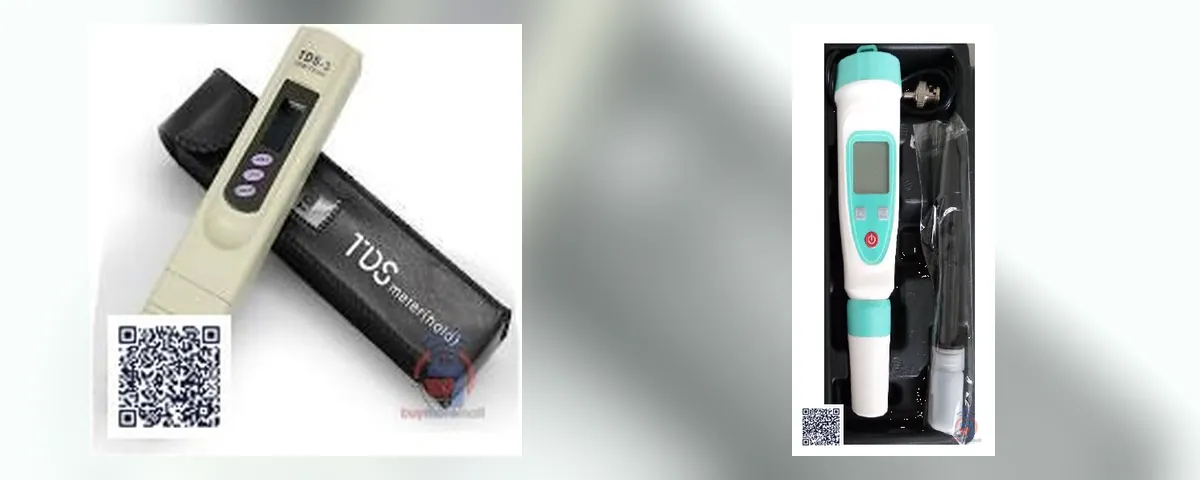
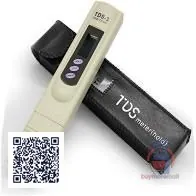 TDS Handheld MeterKSh 6,500
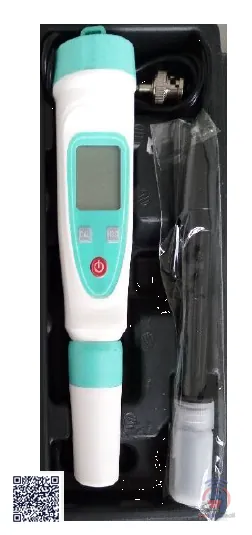 pH Handheld MeterKSh 4,500
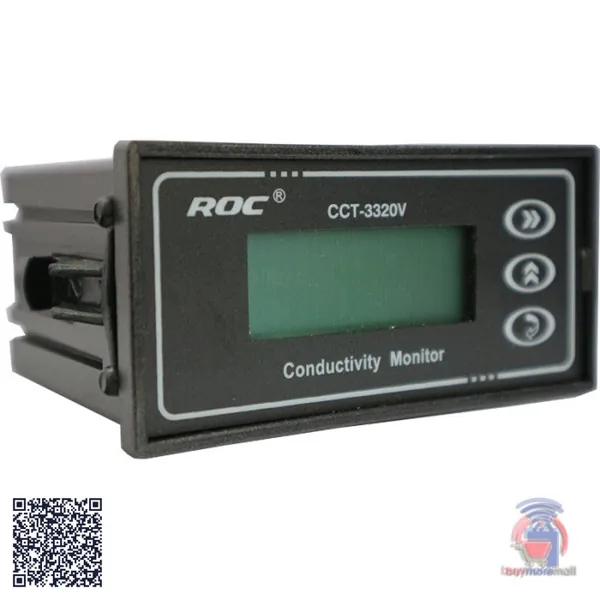 Conductivity Monitor – Model: CCT3320V (CM230)KSh 12,000
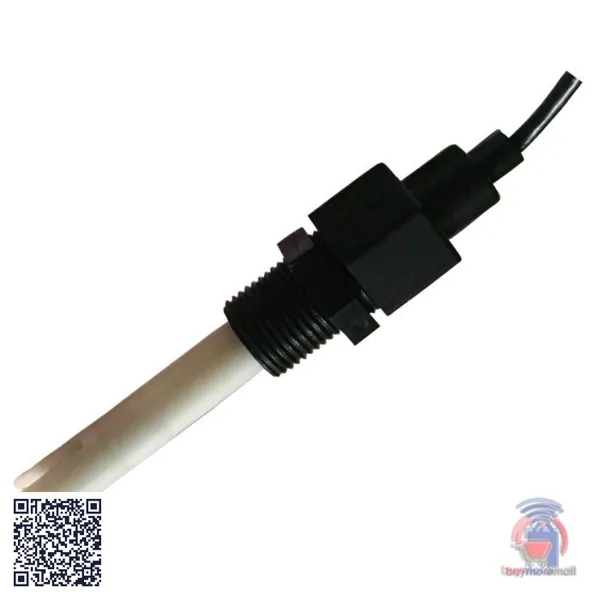 Conductivity ProbeKSh 3,000
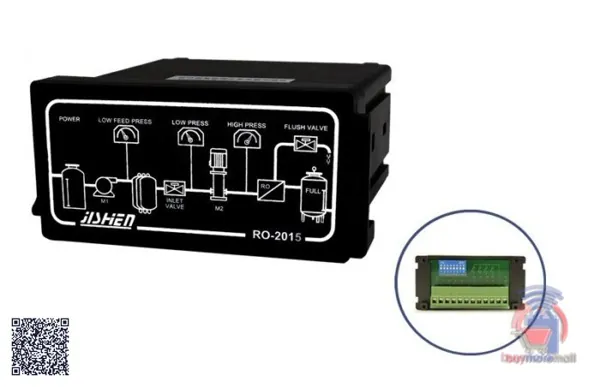 Panel Mount RO Controller (RO-2015)KSh 15,000
| Product | Price |
|---|---|
| TDS Handheld Meter | KSh 6,500 |
| pH Handheld Meter | KSh 4,500 |
| Conductivity Monitor – Model: CCT3320V (CM230) | KSh 12,000 |
| Conductivity Probe | KSh 3,000 |
| Panel Mount RO Controller (RO-2015) | KSh 15,000 |
Current listed prices incl. VAT (updated 13 October 2026).
How to Calibrate a pH Meter
- Rinse the electrode with clean (distilled or RO) water and blot dry; do not rub.
- Place it in pH 7.00 buffer, wait for a stable reading and calibrate (CAL) to 7.00.
- Rinse, then place in pH 4.00 (or pH 10.00 for alkaline samples) and calibrate.
- Rinse again and measure your sample.
- Store the electrode wet in storage solution, never dry or in RO water.
How to Check and Calibrate a TDS / Conductivity Meter
- Use a fresh standard solution of known value (for example a 1,413 µS/cm conductivity standard, or a stated ppm TDS standard).
- Dip the probe, stir gently and wait for a stable reading.
- If it differs, adjust using the meter’s calibration screw or CAL function.
- Rinse and test samples at room temperature (most meters compensate, but extremes still affect accuracy).
Note: different meters convert conductivity to TDS with different factors (often 0.5–0.7), so two brands can show different ppm for the same water. Compare like with like.
Daily Checks at a Water Refill Station
- Raw (feed) water TDS and product water TDS: the difference shows RO rejection.
- Product pH after remineralisation.
- Record in a logbook with date, time and readings; rising product TDS means filters or membrane need attention.
What is a good reading? See what TDS is safe for drinking water and pH of drinking water. Meters are screening tools; for licensing and borehole decisions use a laboratory test (how to read a water test report).
Watch: RO purifiers and water ATMs
Frequently asked questions
How do I calibrate a TDS meter?
Dip it in a standard solution of known value and adjust the reading to match, then rinse.
How often should I calibrate a pH meter?
Before important measurements and at least weekly in daily use; daily in a busy plant.
Why do two TDS meters give different readings?
They use different conversion factors from conductivity to ppm, and may not be calibrated.
What is the difference between TDS and conductivity?
Conductivity is measured directly; TDS is estimated from it.
How should I store a pH electrode?
Wet, in storage solution; never dry and never in pure RO water.