
Home › Guides › Motors and drives
Variable Frequency Drives (VFDs) for Pumps, Fans and Machines: A Practical Guide
- Changes motor speed by frequency
- Soft start + protection
- Size by full-load amps and kW
- Big savings on pumps and fans
On this page
What Is a VFD and What Is Its Function?
An AC motor runs at a speed set by the supply frequency (50 Hz in Kenya). A VFD converts the incoming AC to DC and back to AC at whatever frequency you set, from a few hertz to 50 Hz or more, so the motor runs slower or faster. Because it ramps up gradually, it also replaces a starter and protects the motor against overload, phase loss and over- or under-voltage.
Where VFDs Pay Off
| Application | Why a VFD helps |
|---|---|
| Booster and borehole pumps | Constant pressure: speed follows demand instead of on/off cycling |
| Fans and blowers | Airflow matched to need; big energy savings at part speed |
| Conveyors and mixers | Adjustable speed and gentle starts protect belts and gearboxes |
| Machines with heavy starts | Lower inrush current, smaller generator needed |
| Single-phase site, three-phase motor | Some drives accept single-phase input and output three-phase for small motors |
The energy saving comes from the "affinity laws": a pump or fan’s power falls roughly with the cube of speed, so running at 80% speed can need about half the power. Savings are smaller on machines that need full torque all the time.
How to Size a VFD
- Read the motor nameplate: kW (or HP), voltage, full-load current (FLA) and phases.
- Choose a drive whose rated output current is at least the motor FLA, not just the same kW.
- Pick the duty: normal duty for pumps and fans; heavy duty (more overload capacity) for conveyors, crushers and mixers.
- Check input supply: three-phase 415 V or single-phase 240 V input models.
- Allow for altitude and heat: drives are often derated at high temperatures and altitudes, common in parts of Kenya.
- Add accessories as needed: input reactor or filter, output reactor for long motor cables, pressure transducer for constant-pressure pumping.
Motors and Variable-Speed Pumps at H-TECH
 DAYLIFF DPL1100 VARIABLE SPEED POOL PUMPKSh 57,600
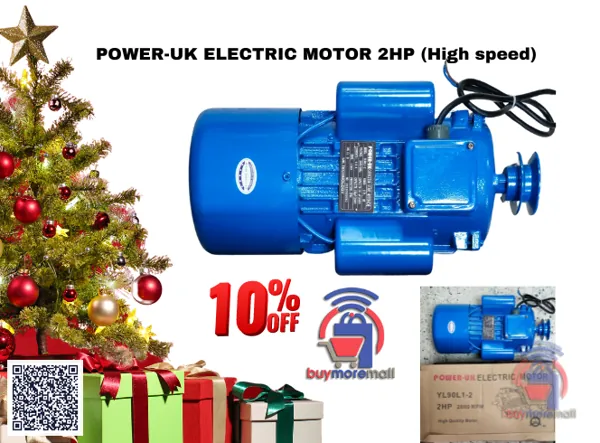 POWER-UK ELECTRIC MOTOR 2HP (High speed)KSh 21,000
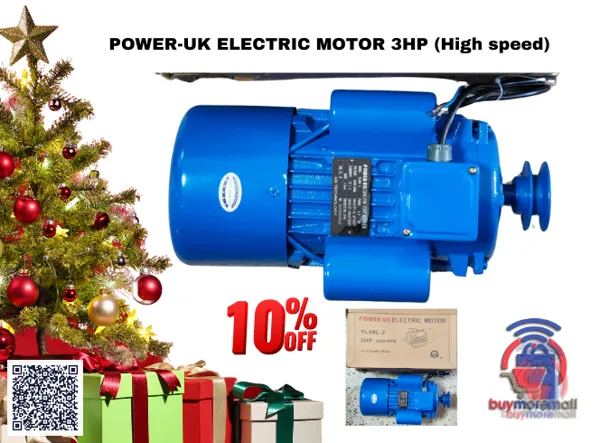 POWER-UK ELECTRIC MOTOR 3HP (High speed)KSh 24,000
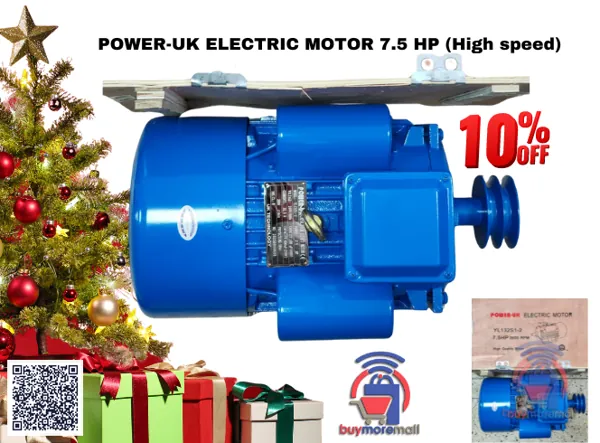 POWER-UK ELECTRIC MOTOR 7.5HP (High speed)KSh 39,000
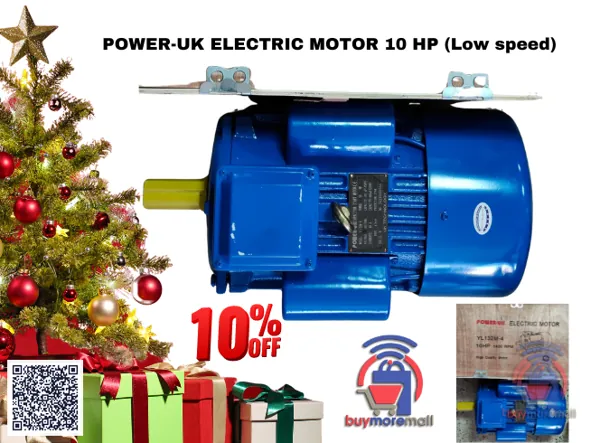 POWER-UK ELECTRIC MOTOR 10HP (Low speed)KSh 45,000
| Product | Price |
|---|---|
| DAYLIFF DPL1100 VARIABLE SPEED POOL PUMP | KSh 57,600 |
| POWER-UK ELECTRIC MOTOR 2HP (High speed) | KSh 21,000 |
| POWER-UK ELECTRIC MOTOR 3HP (High speed) | KSh 24,000 |
| POWER-UK ELECTRIC MOTOR 7.5HP (High speed) | KSh 39,000 |
| POWER-UK ELECTRIC MOTOR 10HP (Low speed) | KSh 45,000 |
Current listed prices incl. VAT (updated 18 November 2026).
Choosing the motor first: electric motor price and HP guide; supply type: single-phase vs three-phase motors.
Installation Basics
- Mount the drive vertically in a clean, ventilated panel away from direct sun; keep the fan clear of dust.
- Use the cable size and protective device the manual specifies, and screened motor cable where required.
- Earth the drive, motor and cable screen properly.
- Keep motor cables short where possible; long runs may need an output reactor.
- Do not fit contactors between the drive and motor that switch while running.
Safety: motor starters, drives, cables, breakers and three-phase connections must be designed, installed and tested by a qualified electrician. Isolate and lock off power before touching any terminal. These figures help you plan and ask the right questions.
Basic Programming
Most drives need only a few settings for a pump or fan: motor nameplate data (kW, volts, amps, speed, frequency), acceleration and deceleration times, minimum and maximum frequency, start/stop source (keypad or terminals) and, for constant pressure, the PID set-point from a pressure sensor. Run the drive’s motor auto-tune if it offers one.
Troubleshooting Common Faults
| Fault | Typical causes |
|---|---|
| Over-current | Acceleration too fast, jammed load, motor or cable fault |
| Over-voltage | Deceleration too fast on a heavy load; supply spikes |
| Under-voltage | Weak supply or generator, loose input connection |
| Over-temperature | Blocked fan, hot or dusty panel |
| Earth fault | Damaged cable insulation, wet motor |
VFD Price Factors in Kenya
- Power rating and current (bigger kW costs more).
- Input type: single-phase input models for small motors vs three-phase.
- Duty rating, enclosure (IP rating) and built-in filters.
- Pump features: built-in PID, sleep mode, dry-run protection.
- Panel, cable, sensor and installation costs.
Mistakes to Avoid
- Sizing by kW only, ignoring motor current.
- Installing in a hot, dusty, unventilated box.
- Running a standard motor at very low speed for long periods without checking cooling.
- Skipping earthing and screened cables.
- Expecting savings on a load that needs full speed all day.
Frequently asked questions
What is a VFD and its function?
A variable frequency drive changes the frequency and voltage supplied to an AC motor to control its speed, start it softly and protect it.
Does a VFD save electricity?
On pumps and fans, yes: running slower than full speed can cut power use sharply. On constant full-load machines, savings are small.
How do I size a VFD?
Choose a drive with output current at least the motor’s full-load current, the right supply voltage and phases, and the correct duty rating.
Can a VFD run a three-phase motor on single-phase power?
Some small drives accept single-phase input and output three-phase; check the drive’s rating for your motor size.
How much is a VFD in Kenya?
Price depends on power rating, input type and features; ask for a quote with the motor nameplate details.