
Home › Guides › Water treatment components
Conductivity vs TDS: What Each Meter Measures and Which One Your RO Plant Needs
- TDS is calculated from conductivity
- Factor ~0.5–0.7
- Handheld for spot checks
- Inline monitor for RO plants
On this page
What Conductivity and TDS Measure
Dissolved salts and minerals carry electric current. A conductivity meter measures that current between two electrodes and reports it in microsiemens per centimetre (µS/cm). A TDS meter measures the same thing and multiplies it by a conversion factor to estimate total dissolved solids in parts per million (ppm). That is why two TDS meters with different factors can give different readings for the same water.
Meters and Monitors at H-TECH
 TDS Handheld MeterKSh 6,500
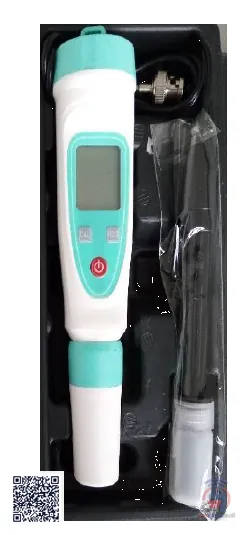 pH Handheld MeterKSh 4,500
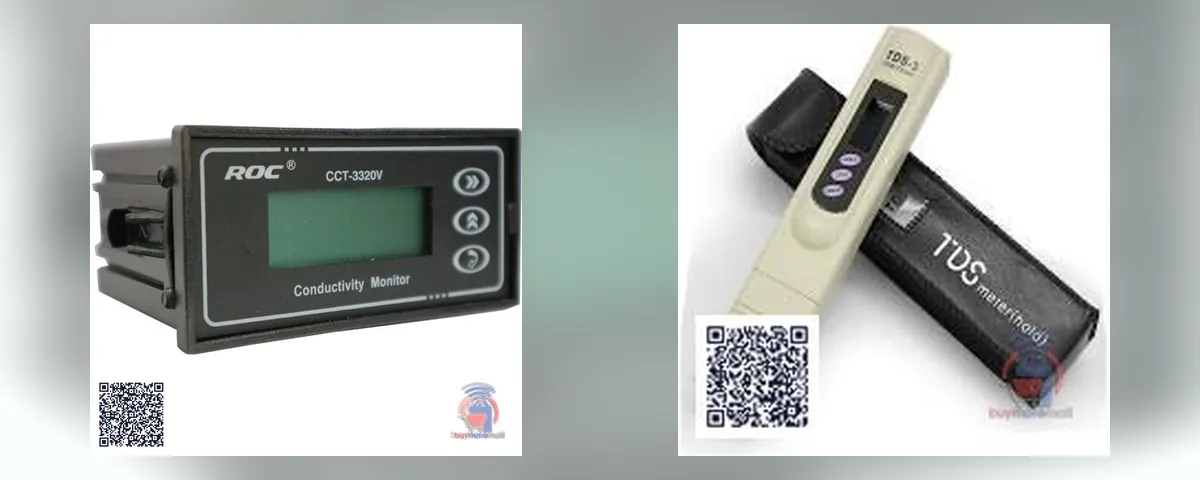
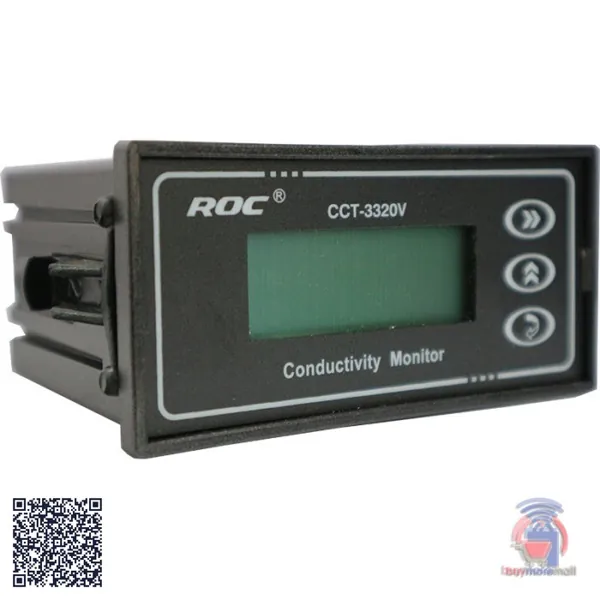 Conductivity Monitor – Model: CCT3320V (CM230)KSh 12,000
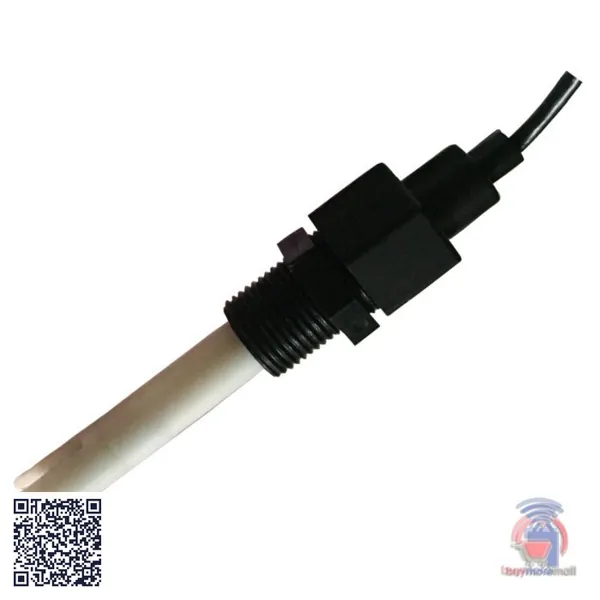 Conductivity ProbeKSh 3,000
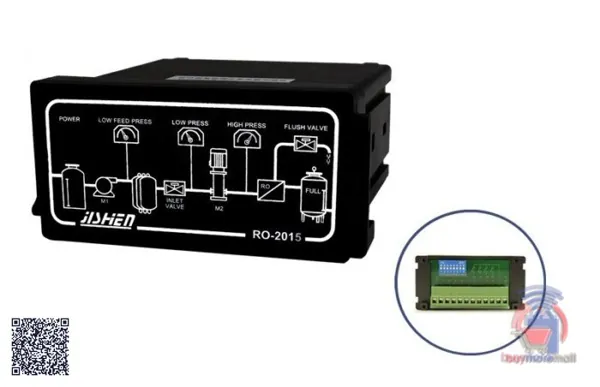 Panel Mount RO Controller (RO-2015)KSh 15,000
| Product | Price |
|---|---|
| TDS Handheld Meter | KSh 6,500 |
| pH Handheld Meter | KSh 4,500 |
| Conductivity Monitor – Model: CCT3320V (CM230) | KSh 12,000 |
| Conductivity Probe | KSh 3,000 |
| Panel Mount RO Controller (RO-2015) | KSh 15,000 |
Current listed prices incl. VAT (updated 19 October 2026).
Conversion Between Conductivity and TDS
| Conductivity (µS/cm) | TDS at factor 0.5 (ppm) | TDS at factor 0.7 (ppm) |
|---|---|---|
| 100 | 50 | 70 |
| 500 | 250 | 350 |
| 1,000 | 500 | 700 |
Check which factor your meter uses (it is often stated in the manual). Compare readings from the same meter over time.
Handheld TDS Meter vs Inline Conductivity Monitor
| Handheld TDS meter | Inline conductivity monitor | |
|---|---|---|
| Use | Spot checks, customers, small systems | Continuous monitoring of RO product water |
| Installation | None | Probe in the pipe, display on the panel |
| Alarms | No | Can alert or work with the controller |
Where to Measure in an RO Plant
- Feed water: to know what the membranes are dealing with.
- Permeate (product): the quality you sell or drink.
- Salt rejection ≈ (1 − permeate ÷ feed) × 100%: a falling percentage means membrane wear or damage.
For what readings are acceptable for drinking water, see what TDS is safe to drink. Remember TDS does not detect bacteria or every contaminant: test water properly in a lab for a full picture.
Calibration and Care
- Calibrate with a standard solution as the maker instructs (how to calibrate TDS and pH meters).
- Rinse probes with clean water after use; do not touch electrodes.
- Keep inline probes free of scale and air bubbles.
Watch: RO purifiers and water ATMs
Frequently asked questions
What is the difference between conductivity and TDS?
Conductivity is measured directly in µS/cm; TDS is estimated from it using a factor and shown in ppm.
How do I convert conductivity to TDS?
Multiply by the meter's factor, often about 0.5–0.7.
Which meter does an RO plant need?
A handheld TDS meter for spot checks and an inline conductivity monitor for continuous product water monitoring.
Does a TDS meter detect bacteria?
No. It measures dissolved solids only.
How do I check RO membrane health?
Compare feed and permeate readings to calculate salt rejection over time.