
Home › Guides › Machine control
PLC vs Arduino: Which Should Control Your Machine?
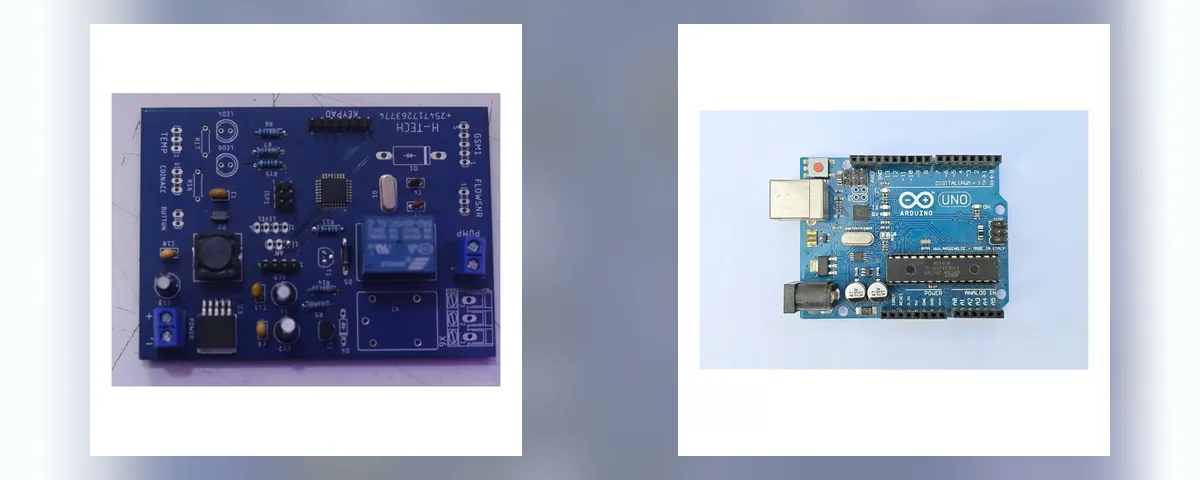
- Arduino: prototypes and learning
- PLC: daily industrial duty
- Protection and terminals matter
- Plan support and spares
On this page
PLC vs Arduino: Side by Side
| Arduino / ESP32 board | Industrial PLC | |
|---|---|---|
| Inputs | 3.3–5 V logic pins, easily damaged | 24 V inputs, isolated and filtered |
| Outputs | Logic pins; needs relay modules | Built-in relay or transistor outputs |
| Electrical noise | Can reset or misread near motors | Designed for factory noise |
| Mounting | Bare board, jumper wires | DIN rail, screw terminals, enclosure |
| Programming | C/C++ in the Arduino IDE | Ladder logic and IEC languages |
| Diagnostics | Serial monitor on a laptop | Status LEDs, online monitoring, HMI |
| Cost of the controller | Low | Higher |
| Best for | Learning, prototypes, gadgets | Machines that must run every day |
When an Arduino Is Enough
- School projects, training and demonstrations.
- A prototype to prove a machine idea before building the real panel.
- Indoor, low-voltage gadgets such as a tank level display or greenhouse monitor.
- Projects where a failure only means inconvenience, not loss or danger.
When You Need a PLC
- Machines in dusty, wet, hot or vibrating places (mills, dairies, pump houses).
- Anything switching big motors, heaters or 415 V loads.
- Customers paying for the output (vending machines, filling lines).
- Processes with safety risk: steam, hot liquids, chemicals, moving parts.
- Machines that a technician other than the builder must maintain.
The Middle Option: An Industrial Controller Board
Between a bare Arduino and a full brand-name PLC sits the industrial controller board: a familiar microcontroller on a board with protected inputs, driver outputs, screw terminals and a proper power supply. The H-TECH PLC board is Herritech’s version, built around the same ATmega328P chip as the Arduino Uno and programmed from your browser in the Controller Lab, with ready projects for water vending, pumps, tank control and GSM.
Arduino, ESP32 and GSM parts for prototypes
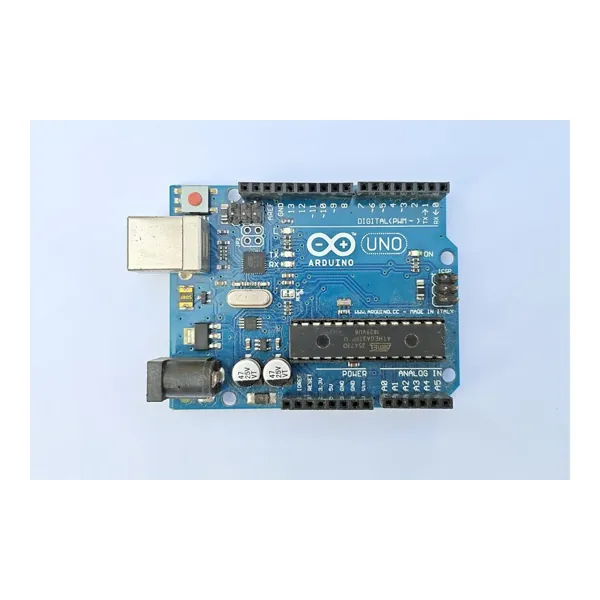 Arduino Uno R3 compatible board (ATmega328P)KSh 2,800
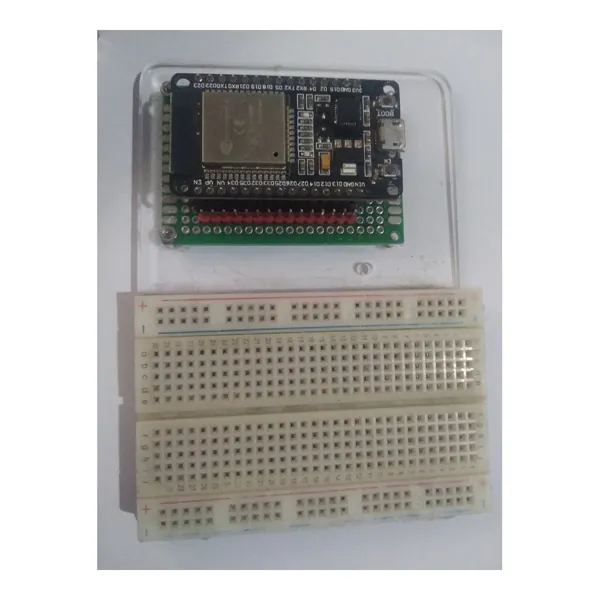 ESP32 DevKit WiFi + Bluetooth board (WROOM-32)KSh 1,300
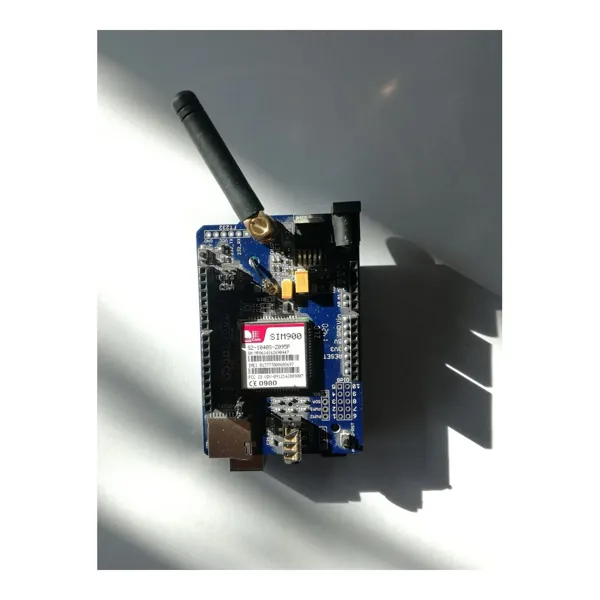 SIM800L GSM/GPRS module with antennaKSh 2,100
| Product | Price |
|---|---|
| Arduino Uno R3 compatible board (ATmega328P) | KSh 2,800 |
| ESP32 DevKit WiFi + Bluetooth board (WROOM-32) | KSh 1,300 |
| SIM800L GSM/GPRS module with antenna | KSh 2,100 |
Current listed prices incl. VAT (updated 24 November 2026).
Reliability Tips for Any Controller
- Separate the control supply (12/24 V) from mains wiring.
- Use relays or contactors for loads, never logic pins.
- Add input isolation (optocouplers) when reading 12–24 V machine signals.
- Put the controller in a closed, ventilated box away from water.
- Keep a copy of the program and a spare controller for important machines.
Safety: control panels, contactors, motor circuits and anything on 240/415 V must be designed, wired and tested by a qualified electrician. Isolate and lock off power before opening a panel. This guide helps you plan and ask the right questions.
Read the basics first in what is a PLC.
Worked Example: Prototype on Arduino, Production on a Controller Board
A water ATM builder in Kiambu proves a new dispensing sequence on an Arduino Uno on the bench in a week. For the 20 machines that go to customers, the same logic moves to protected controller boards in sealed panels with 24 V inputs and relay outputs, so dust, damp and pump noise do not cause resets in the field.
Questions to Ask Before You Choose
- What happens if the controller resets during a cycle?
- Who will maintain the program in two years?
- Can you get a spare controller in a day?
- Do inputs come from long cables near motors?
- Does the machine take money from customers?
Watch: RO purifiers and water ATMs
Frequently asked questions
Can Arduino replace a PLC?
For prototypes and light indoor duty, yes. For industrial machines, a PLC or industrial controller board is far more reliable.
Why are PLCs more expensive than Arduino?
You pay for protected inputs and outputs, industrial certification, terminals, diagnostics, support and long product life.
Is Arduino used in industry?
It is used for prototypes, test rigs and some light products, usually on industrial-grade boards with protection.
PLC vs Arduino vs Raspberry Pi: what is the difference?
A Raspberry Pi is a small computer running an operating system; Arduino is a microcontroller; a PLC is an industrial controller built for machines.
Which should I learn first?
Arduino is cheaper for learning the logic; PLC ladder logic is what most factory jobs ask for.