Home › Guides › Water treatment components
RO Controllers: How They Run and Protect a Reverse Osmosis Plant
- Runs on tank level
- Low-pressure protection
- Automatic flushing
- Conductivity alarm
On this page
What an RO Controller Controls
| Input | What the controller does |
|---|---|
| Product tank float / level switch | Starts the plant when low, stops when full |
| Low-pressure switch on feed | Stops the high-pressure pump if feed water is lost |
| High-pressure switch (where fitted) | Stops the plant if pressure is dangerously high |
| Conductivity probe | Shows product quality; alarm above a set point |
| Pre-treatment signal (where fitted) | Pauses the RO while a filter backwashes |
| Output | Controls |
|---|---|
| Inlet solenoid valve | Opens feed water to the plant |
| Pump relay / contactor | Runs the high-pressure pump |
| Flush solenoid | Flushes membranes at start or stop |
Controllers and Instruments at H-TECH
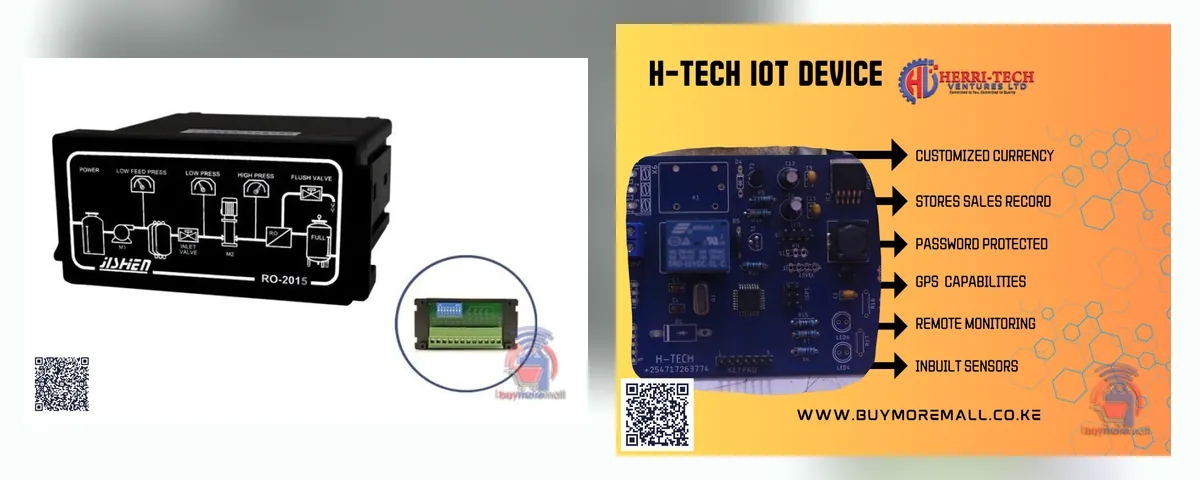
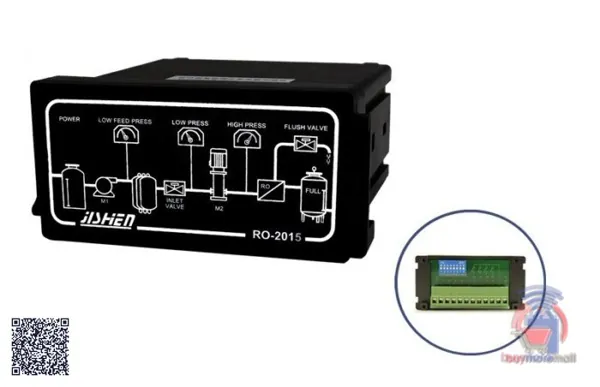 Panel Mount RO Controller (RO-2015)KSh 15,000
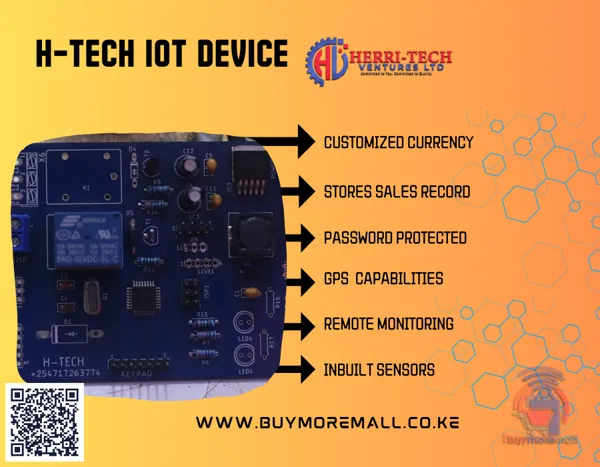 H-TECH P.L.CKSh 6,500
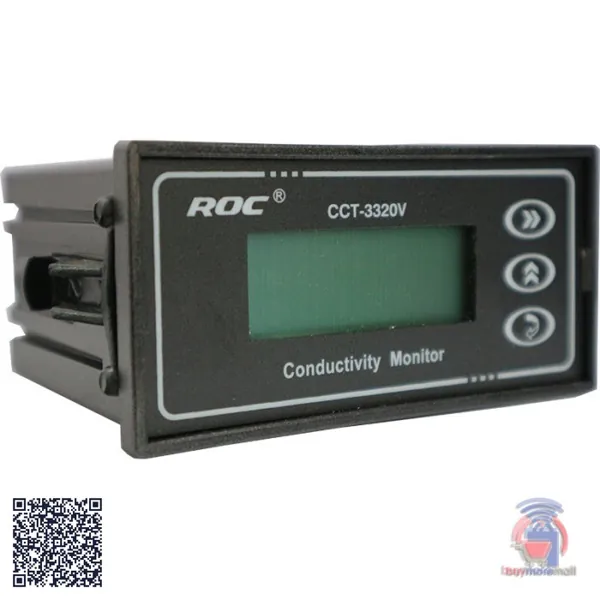 Conductivity Monitor – Model: CCT3320V (CM230)KSh 12,000
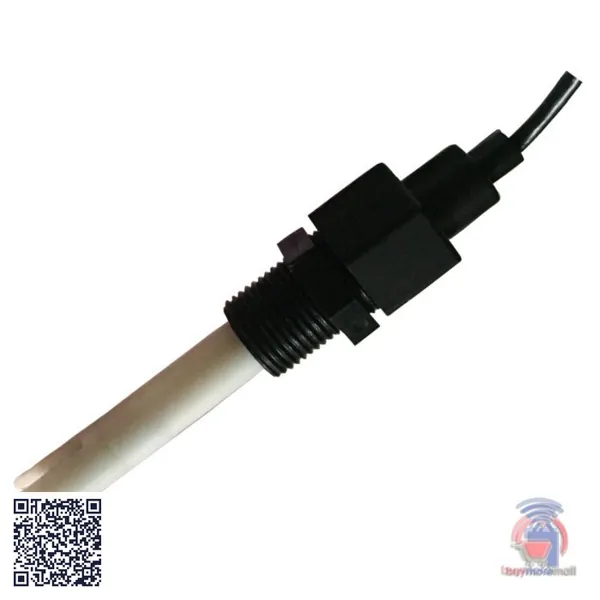 Conductivity ProbeKSh 3,000
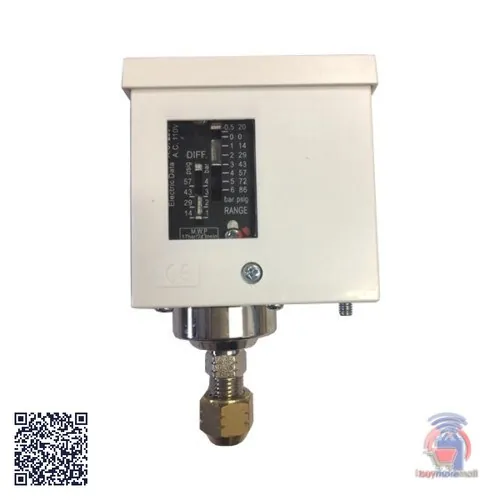 Pressure SwitchKSh 4,500
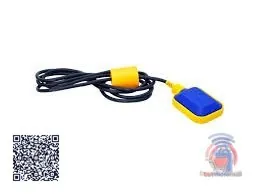 DAYLIFF FLOATSWITCHKSh 2,630
| Product | Price |
|---|---|
| Panel Mount RO Controller (RO-2015) | KSh 15,000 |
| H-TECH P.L.C | KSh 6,500 |
| Conductivity Monitor – Model: CCT3320V (CM230) | KSh 12,000 |
| Conductivity Probe | KSh 3,000 |
| Pressure Switch | KSh 4,500 |
| DAYLIFF FLOATSWITCH | KSh 2,630 |
Current listed prices incl. VAT (updated 19 October 2026).
A Normal Operating Cycle
- Tank level drops; the controller opens the inlet valve.
- After feed pressure is confirmed, it starts the high-pressure pump.
- Product water fills the tank while conductivity is displayed.
- When the tank is full, it stops the pump and closes the inlet; many controllers then flush the membranes.
- If feed pressure drops (no water), it stops and shows an alarm, then retries after a delay.
Panel Controller or PLC?
A dedicated panel RO controller suits small and medium plants and vending stations: simple, pre-programmed and affordable. A PLC suits larger or custom plants that combine RO with multimedia filters, softeners, dosing and UV, where you need custom logic and more inputs.
Common Faults
- Plant will not start: tank float stuck "full", low-pressure switch tripped, or no power to the pump circuit.
- Plant stops and restarts: feed pressure dropping when the pump starts; check pre-filters and the feed pump (sediment filters).
- High conductivity alarm: membrane worn or damaged, or a seal leaking; see conductivity vs TDS.
Safety: RO control panels carry mains voltage. Wiring changes should be made by a qualified technician with the power isolated.
Related equipment: solenoid valves and float switches and RO maintenance.
Watch: RO purifiers and water ATMs
Frequently asked questions
What does an RO controller do?
It starts and stops the plant on tank level, protects the pump on low pressure, flushes membranes and can show conductivity.
Why won't my RO plant start?
Often the tank float reads full, the low-pressure switch has tripped or the pump circuit has no power.
Do I need a PLC for an RO plant?
Small and medium plants run well on a panel RO controller; large or combined plants may need a PLC.
What is membrane flushing?
A short rinse of the membranes, often at start or stop, to reduce fouling.
Can an RO controller show water quality?
Many models display product conductivity from a probe.