
Water Purification Methods in Kenya: Which One Do You Need?
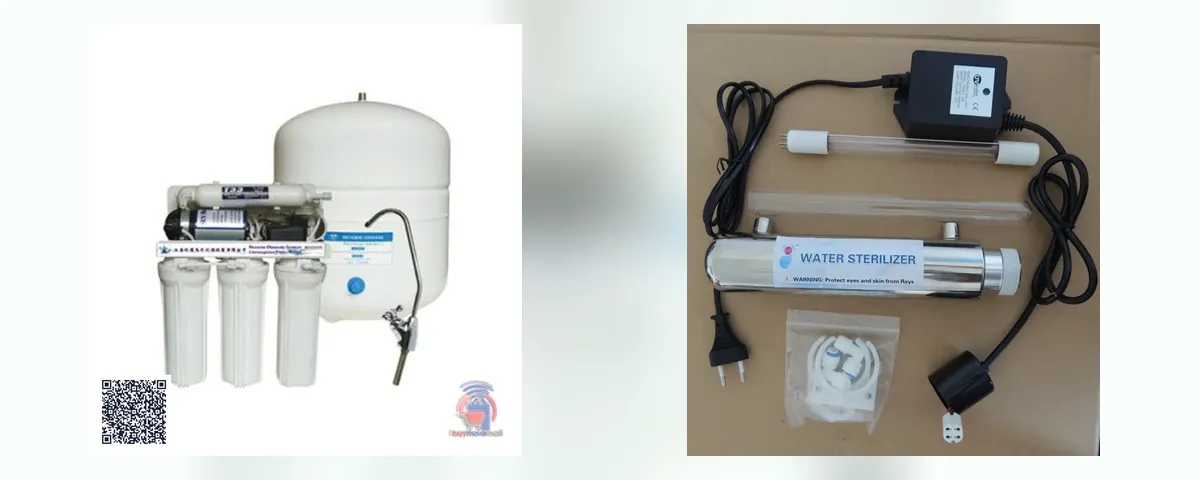
- Germs: boil, chlorine or UV
- Dirt and taste: sediment + carbon
- Salty or fluoride water: RO
- Test first, then choose
On this page
Water Purification Methods Compared
| Method | Removes | Does not remove | Best for |
|---|---|---|---|
| Boiling | Bacteria, viruses | Salt, fluoride, chemicals, dirt | Emergency, small amounts |
| Chlorine | Most germs; protects stored water | Salt, fluoride, chemicals | Tanks, boreholes (dose guide) |
| Sediment + carbon filters | Dirt, rust, chlorine taste, odour | Germs (unless combined), salt | Pre-treatment, taste |
| UV sterilizer | Bacteria, viruses | Salt, chemicals, dirt | Clear water that needs disinfection |
| UF (ultrafiltration) | Bacteria, cloudiness | Dissolved salt, fluoride | Municipal water, low-TDS sources |
| Reverse osmosis (RO) | Salt, fluoride, most chemicals, germs | Some gases; needs pre-filters | Borehole and salty water, drinking water |
| Softener | Hardness (scale) | Germs, salt | Hard water (hard water guide) |
How to Purify Water at Home
- Municipal (tap) water: a UF or RO under-counter purifier.
- Borehole water: test it; most need sediment and carbon filters plus RO, sometimes iron removal or a softener.
- Rain or tank water: filters plus UV or chlorine.
- River or dam water: settle, filter and disinfect (step by step).
Home and Office Purifiers
 UF Under Counter System (5 Stage)KSh 17,000
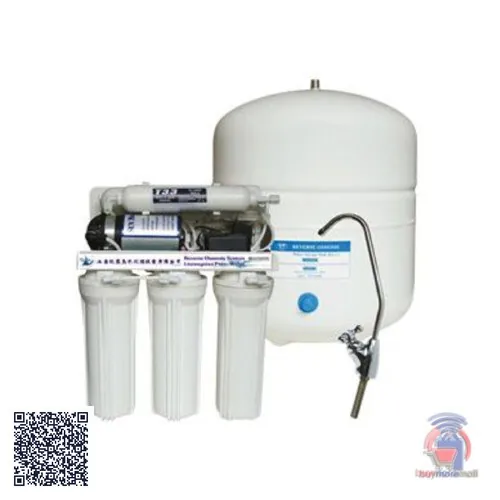 RO Under counter system, without booster pumpKSh 30,000
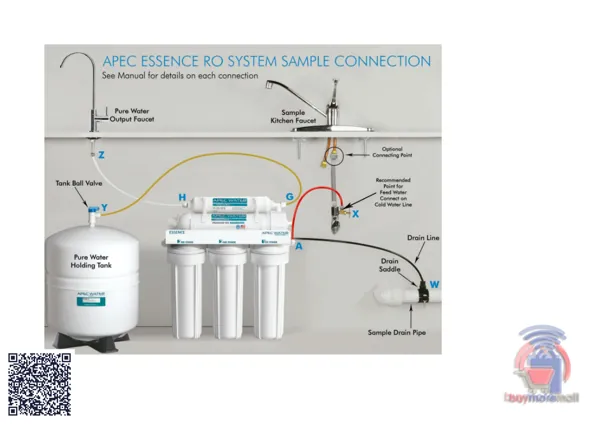 RO Under counter system, with booster pumpKSh 35,000
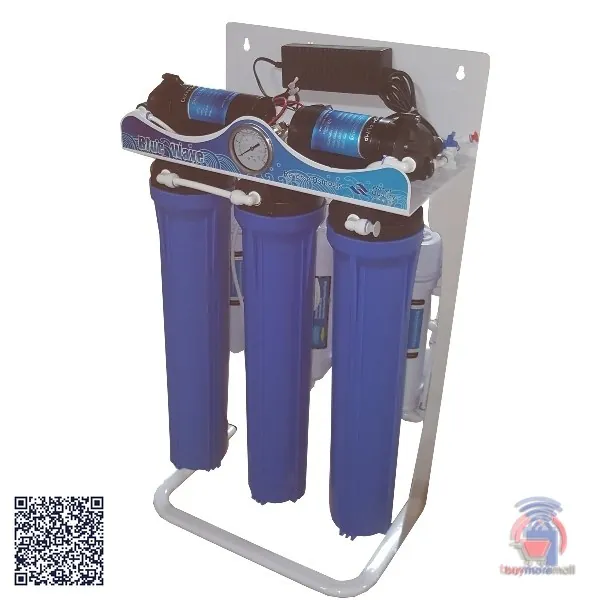 RO-400G-D02B 5-Stage RO SystemKSh 98,000
| Product | Price |
|---|---|
| UF Under Counter System (5 Stage) | KSh 17,000 |
| RO Under counter system, without booster pump | KSh 30,000 |
| RO Under counter system, with booster pump | KSh 35,000 |
| RO-400G-D02B 5-Stage RO System | KSh 98,000 |
Current listed prices incl. VAT (updated 7 October 2026).
UV Sterilizers
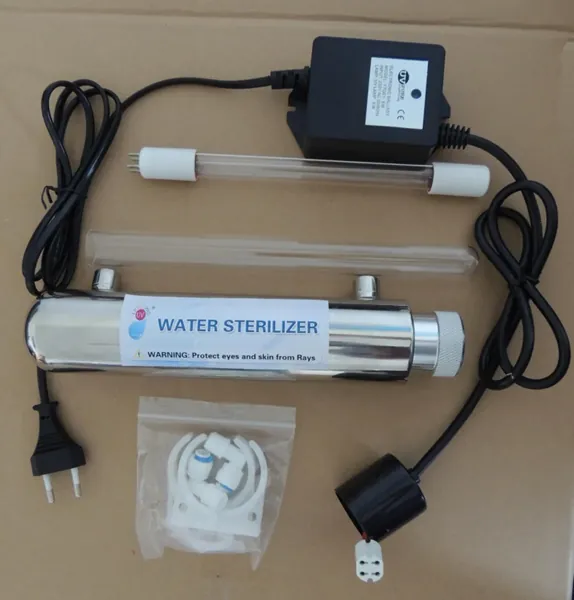 H-Tech 0.4GPM 6W UV SterilizerKSh 5,000
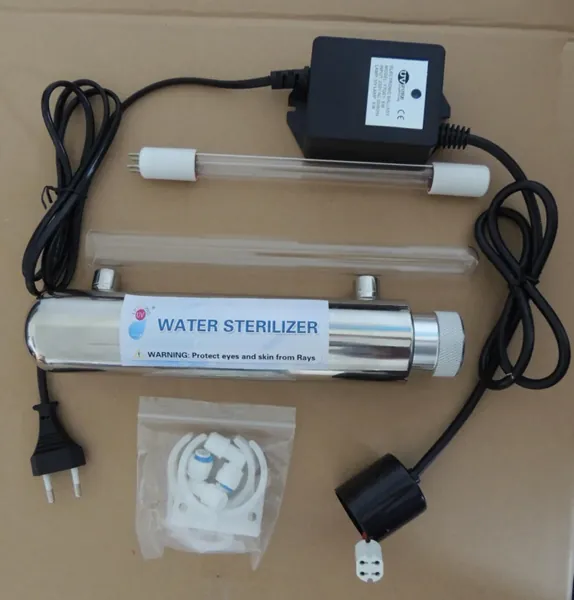 H-Tech 1GPM 12W UV SterilizerKSh 6,000
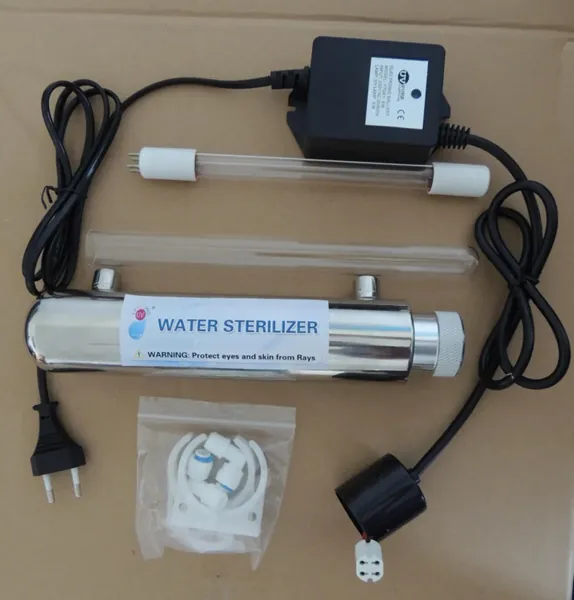 H-Tech 6GPM 25W UV SterilizerKSh 13,000
| Product | Price |
|---|---|
| H-Tech 0.4GPM 6W UV Sterilizer | KSh 5,000 |
| H-Tech 1GPM 12W UV Sterilizer | KSh 6,000 |
| H-Tech 6GPM 25W UV Sterilizer | KSh 13,000 |
Current listed prices incl. VAT (updated 7 October 2026).
Test Before You Buy
A TDS reading tells you how much dissolved salt is in the water; it does not show germs. For a borehole, get a lab test. See how to test water quality and what TDS is safe.
For a Water Business
Refill stations combine several methods: sediment and carbon filters, RO or UF, then UV or ozone. See water business ideas.
Watch: RO purifiers and water ATMs
Frequently asked questions
What are the methods of water purification?
Boiling, chlorination, filtration (sediment and carbon), UV disinfection, ultrafiltration, reverse osmosis and softening.
What is the best method to purify water at home?
For tap water a UF or RO purifier; for salty borehole water, RO with pre-filters.
Does boiling remove salt or fluoride?
No. Boiling kills germs but leaves salt and fluoride; RO removes them.
Is UV enough to purify water?
Only for clear water that needs disinfection; it does not remove salt or chemicals.
What is the cheapest way to purify water?
Boiling or chlorine for germs; a UF purifier for daily drinking water.