Home › Guides › Water treatment components
Carbon Filter Cartridges: Sizes, Types, What They Remove and When to Replace
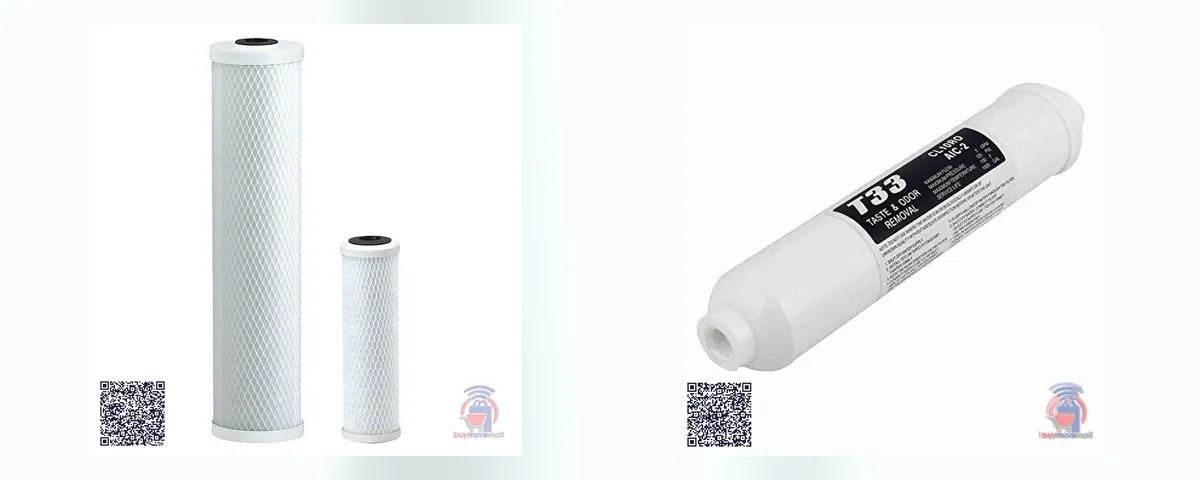
- Removes chlorine, taste, odour
- After sediment, before RO/UV
- Match length and diameter
- Replace about every 6 months
On this page
What Does a Carbon Filter Remove?
| Removes well | Does not remove |
|---|---|
| Chlorine and chlorine taste | Dissolved salts (TDS); use RO |
| Odours and many organic chemicals | Hardness; use a softener |
| Some pesticides and colour | Bacteria reliably; use UV |
Chlorine also damages RO membranes, which is why every RO system has a carbon stage before the membrane.
Cartridges and Housings at H-TECH
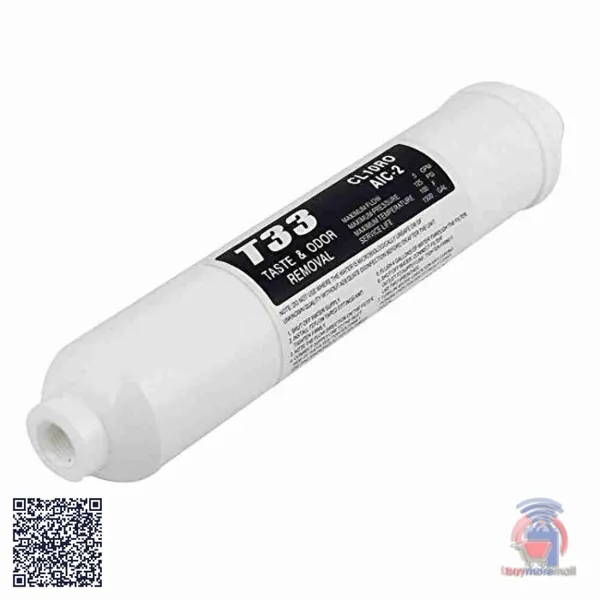 Taste & Odour Removal CartridgeKSh 1,200
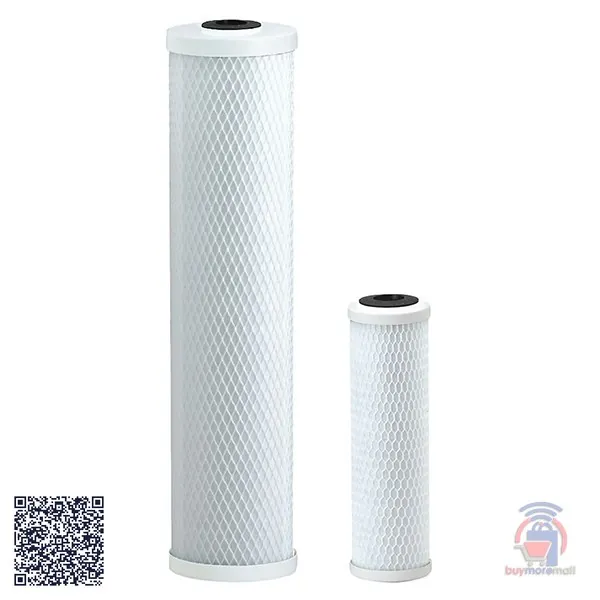 Carbon Block Coconut Shell Big Blue Cartridges (1um)KSh 1,300
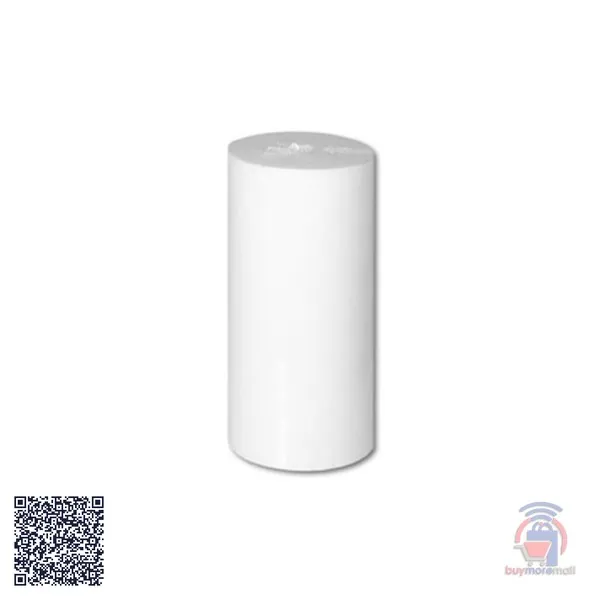 Polypropylene Sediment Filter Cartridges 10″ Big BlueKSh 350
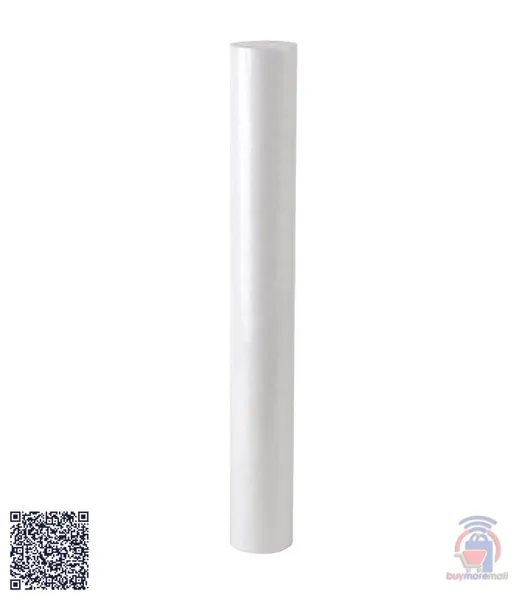 Polypropylene Sediment Filter Cartridges 20″ SlimlineKSh 700
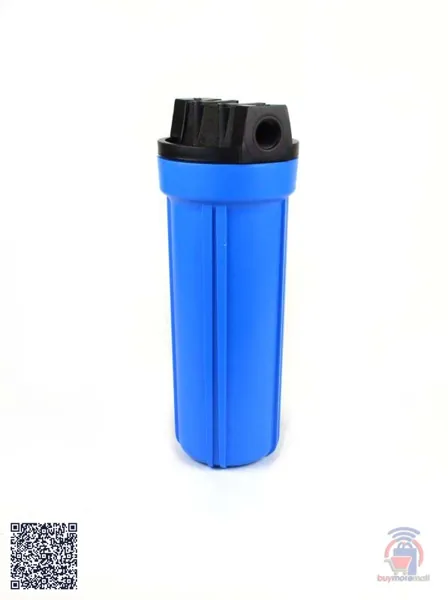 Standard/Slimline Blue Plastic Filter Housings 10″KSh 1,900
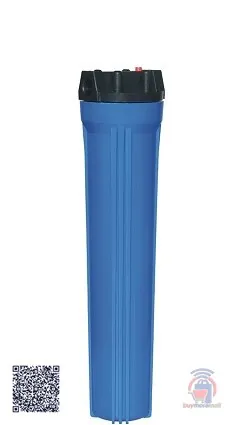 Blue Plastic Filter Housings 20″KSh 3,500
Current listed prices incl. VAT (updated 19 October 2026).
Carbon Block vs Granular (GAC)
| Carbon block | Granular activated carbon | |
|---|---|---|
| Filtration | Finer, also traps small particles | Coarser |
| Flow | Slightly lower | Higher |
| Best for | Drinking water, RO pre-filter | High-flow taste and odour removal |
For large plants, carbon is used as loose media in FRP vessels instead: see the activated carbon filter guide.
Sizes: 10", 20", Slim and Big Blue
| Size | Typical use |
|---|---|
| 10" slim (standard) | Under-sink and domestic RO |
| 20" slim | Higher flow, small commercial |
| 10" Big Blue | Whole-house, shops |
| 20" Big Blue | Whole-house high flow, small plants |
Measure your housing's length and diameter (or check its label) before ordering.
Where Carbon Goes in the System
- Sediment cartridge (removes sand and rust; see micron ratings).
- Carbon cartridge.
- RO membrane or UV sterilizer.
- Post-carbon polishing (on some RO systems).
When to Replace a Carbon Cartridge
- About every 6 months for typical household use, sooner with heavy use or high chlorine.
- When chlorine taste or smell returns.
- When flow drops noticeably.
- Always together with the sediment cartridge before it, so the carbon is protected.
Full maintenance schedule: RO filters and membranes.
Watch: RO purifiers and water ATMs
Frequently asked questions
What does a carbon filter cartridge remove?
Chlorine, taste, odour and many organic chemicals; not salts, hardness or bacteria reliably.
How often should I change a carbon filter?
About every 6 months, or sooner if taste returns or flow drops.
Is carbon block better than GAC?
Carbon block filters finer; GAC allows higher flow.
What size carbon cartridge do I need?
The same length (10" or 20") and diameter (slim or Big Blue) as your housing.
Why does an RO system need a carbon filter?
To remove chlorine, which damages RO membranes.