
Solar Dryers: Drying Mango, Vegetables, Grains and Herbs for Sale
- Covered, hygienic drying
- Indirect keeps colour
- About 50–65 °C for fruit
- Pack airtight to sell
On this page
How Does a Solar Dryer Work?
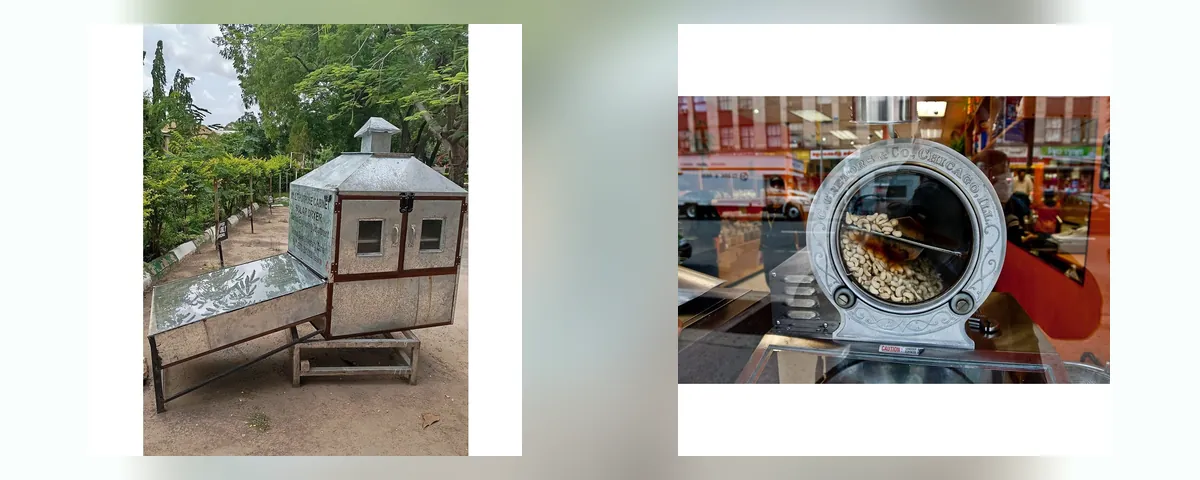
A dark collector under clear plastic or glass heats the air inside. Warm air rises through the drying chamber, picks up moisture from the food on mesh trays and leaves through a vent at the top, pulling in fresh air at the bottom. Because the trays are covered, dust, insects, birds and rain stay out.
Types of Solar Dryer
| Type | How it works | Best for |
|---|---|---|
| Direct (box or tent) | Sun shines straight onto the food | Grains, cassava chips, low cost |
| Indirect | Air heated in a separate collector, food in a shaded chamber | Fruits and vegetables that lose colour in sun |
| Mixed / greenhouse | Both, often with fans | Larger volumes |
| Cabinet dryer with backup heat | Solar plus electric or biomass heat | Business that must dry in any weather |
H-TECH supplies cabinet and solar dryers for small processors; see the packaging and processing machines page and the business setups for honey, spices, tea and coffee and fruit juice.
Drying Temperatures and Times (Guide)
| Product | Prepare | Approx. temperature | Done when |
|---|---|---|---|
| Mango | Ripe, peeled, 5–8 mm slices | 55–65 °C | Leathery, no moisture when squeezed |
| Pineapple | Peeled rings or chunks | 55–65 °C | Pliable, not sticky |
| Banana | Slices, dip in lemon water | 55–60 °C | Leathery to crisp |
| Tomato | Halves or slices, salted lightly | 55–60 °C | Dry, flexible |
| Leafy greens, moringa | Washed, stems removed | 40–50 °C | Crumbly |
| Grains and pulses | Cleaned | Sun or warm air | About 13% moisture or lower |
Times range from one to several sunny days depending on thickness, load and weather; turn and rotate trays once or twice a day.
Hygiene and Packaging
- Wash produce in clean water and work on stainless or food-grade surfaces.
- Use clean mesh trays and keep the dryer closed.
- Cool dried product before packing so it does not sweat.
- Pack in airtight, food-grade pouches with zip or heat seal; add a batch code and date.
- Store cool and dark; check for moisture regularly.
Dried Fruit as a Business
Mango season gluts in Makueni, Machakos, Embu and the coast mean cheap fruit and waste; drying turns it into a product that keeps for months. Sell to supermarkets, schools, hotels and online. For packed food you need county public health approval and KEBS standards; plan for a clean drying room, a sealer and labels. Fruit volumes for pulp and juice: fruit pulp and juice processing.
Worked Example: Dried Mango From a Women’s Group
A women’s group in Machakos buys mangoes in the glut at low prices, slices them on stainless tables and dries them in an indirect solar dryer, adding a cabinet dryer for cloudy days. Packed in 100 g zip pouches with batch codes, the dried mango sells to two supermarkets and a hotel long after the season.
Equipment on this page is quoted on request. Send your capacity, power supply and site photos to H-TECH on WhatsApp for a written quotation.
Frequently asked questions
How does a solar dryer work?
Sun heats air in a covered collector; the warm air passes over trays of food and carries moisture out through a vent.
What temperature should a solar dryer reach?
Around 50–65 °C for most fruits; lower for leafy greens and herbs.
How long does mango take to dry in a solar dryer?
Usually one to a few sunny days for 5–8 mm slices, depending on weather and load.
Is solar drying better than open sun drying?
Yes: faster, cleaner, protected from dust, insects and rain, and better colour.
Is dried fruit business profitable in Kenya?
It can be when fruit is bought cheaply in season and the product is clean, well packed and sold to steady buyers.