
Home › Guides › Start a business
Mango Pulp and Fruit Juice Processing: Machines and Process
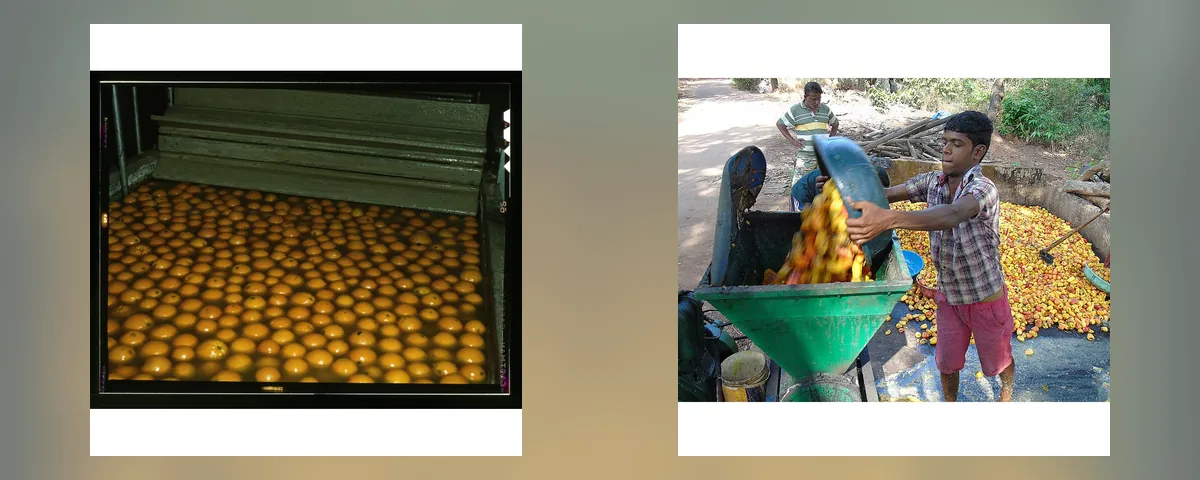
- Wash → sort → crush → pulp
- Pasteurise before filling
- Store for off-season sales
- Buy fruit in season
On this page
The Process Step by Step
- Receive ripe fruit and weigh it.
- Wash in a bubble or brush washer.
- Sort and inspect on a conveyor; remove rotten or green fruit.
- Crush (fruit crusher/hammer mill) or cut.
- Pulp and finish to separate skins, stones and fibre; for juice, use an extractor or screw press.
- Heat to pasteurise, then hot-fill and seal, or cool and store aseptically or frozen.
- Label with batch and date; store cool.
Machines
| Stage | Machine |
|---|---|
| Wash and sort | Bubble and brush washer, sorting conveyor |
| Crush and pulp | Fruit crusher, mango pulper and finisher (destoner) |
| Juice | Juice extractor and screw press |
| Heat and blend | Jacketed tanks, pasteuriser, flavour dosing tank, steam or hot water |
| Fill and pack | Filler, capping, sealing, labelling, coding |
Full equipment list, budget and steps: see the Fruit juice business setup, where you can also get a business pack with your costs, profit and roadmap worked out.
Bottling and washing: juice bottling business and glass bottle washing. Heat source: steam boilers.
Mango Supply
Kenya’s main mango counties include Makueni, Machakos, Embu, Meru, Kilifi and Kwale, with heavy seasonal supply and large losses. Contract farmers or aggregators before the season, agree ripeness and price, and plan storage so the line can run after the season ends.
Who Buys Fruit Pulp?
- Juice makers and yoghurt processors (fruit preparations).
- Bakeries, ice cream makers and hotels.
- Supermarkets (ready-to-drink juice under your brand).
- Exporters, if you meet their quality and certification.
Food Safety
Pulp spoils fast if hygiene or heating fails. Clean equipment daily, control pasteurisation temperature and time, use food-grade packaging and keep batch records. Packed juices and pulps need public health approval and KEBS standards before sale.
Permits and standards: a manufacturing business needs a county business permit and, depending on the product, public health approval, NEMA compliance for waste and emissions, and KEBS standards and marks before selling packed goods. Confirm current requirements with your county, KEBS and NEMA before you buy machines.
Worked Example: A Mango Pulp Season in Makueni
A farmer group contracts 200 tonnes of mangoes from members at an agreed price for ripe fruit. A washer, sorting table, pulper-finisher and jacketed pasteurising tank turn it into pulp, hot-filled into 20 litre food-grade drums. Pulp sells through the off-season to two yoghurt makers and a juice bottler.
Start-up Costs to Plan For
- Machines and installation (get a written quotation per stage).
- Premises: rent, deposit, floor, drainage, ventilation and a clean store.
- Power: three-phase connection or upgrade if your machines need it, plus cabling and a control panel.
- Raw materials for the first one to two months of production.
- Packaging, labels and brand design.
- Permits, KEBS certification and product testing.
- Working capital for credit sales, transport and salaries until sales are steady.
Most machines in these setups are quoted on request. Send your product, daily output and power supply to H-TECH on WhatsApp for a written quotation.
Frequently asked questions
What machine is used to make mango pulp?
A mango pulper and finisher, after washing, sorting and crushing.
How is fruit pulp preserved?
By pasteurising and hot filling, aseptic packing, or freezing.
Is mango pulp business profitable in Kenya?
It can be: fruit is cheap in season and pulp sells year-round to juice, yoghurt and bakery makers.
What is the difference between pulp and juice?
Pulp keeps the fruit flesh as a thick puree; juice is the liquid extracted or diluted for drinking.
Do I need KEBS for fruit juice?
Yes, packed juices must meet KEBS standards before you sell widely.
Start this as a business
See the full equipment list, budget and step-by-step plan, or get a business pack with your costs and profit worked out.