
Drum Roasters for Groundnuts, Coffee, Seeds and Porridge Grains
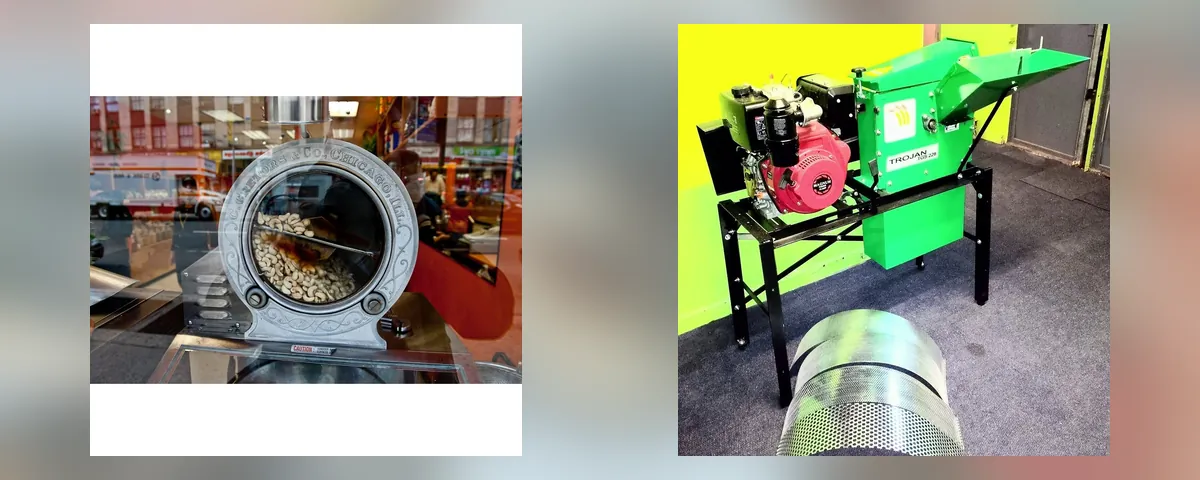
- Even roast in a rotating drum
- Gas, electric or firewood
- Cool quickly after roasting
- Batch size from daily output
On this page
How a Drum Roaster Works
The drum rotates over (or around) a heat source. Paddles inside keep the product moving so no piece sits on the hot metal too long. The operator watches temperature, colour and smell, then empties the batch onto a cooling tray with a stirrer or fan to stop the roasting at the right moment.
What You Can Roast
| Product | Used for | Notes |
|---|---|---|
| Groundnuts | Peanut butter, snacks | Even roast, then blanch (remove skins) for butter |
| Coffee | Ground coffee, beans | Light to dark profiles; cool fast |
| Sesame, sunflower, pumpkin seeds | Snacks, tahini | Small seeds need fine mesh and lower heat |
| Soya, millet, sorghum, maize | Porridge flour, uji mixes | Roasting improves flavour and shelf life |
| Cashew, macadamia | Snacks | Careful temperature control |
H-TECH’s drum roaster for groundnuts, coffee and seeds is part of the peanut butter, spices, tea and coffee and maize and porridge flour setups.
Heat Source: Gas, Electric or Firewood
| Heat | Good | Watch out |
|---|---|---|
| LPG gas | Fast, controllable | Gas safety, cylinder cost |
| Electric | Clean, easy temperature control | Needs strong power supply, often three-phase |
| Firewood/briquettes | Low fuel cost | Harder to control; smoke away from product |
Roast Temperatures and Times (Starting Points)
Groundnuts are commonly roasted around 150–180 °C for roughly 15–30 minutes depending on batch size and the colour you want; coffee roasts typically finish between about 200 and 230 °C. Treat these as starting points: run small test batches, record time, temperature and colour, and keep the profile that customers like.
Quality Control
- Sort out mouldy, shrivelled or discoloured nuts before roasting: aflatoxin risk.
- Roast evenly; scorched pieces make bitter butter and flour.
- Cool quickly and completely before grinding or packing.
- Record each batch (weight in, time, temperature, weight out) for consistency.
- Pack roasted products airtight to keep them crisp and fresh.
Choosing Capacity
Work back from sales: if you plan to make 100 kg of peanut butter a day, you need to roast a bit more than that weight of nuts, in batches that fit your working hours, leaving time for cooling, blanching and grinding. Read peanut butter business and porridge flour business.
Worked Example: Roasting for a Peanut Butter Brand
A Nyeri peanut butter maker roasts 25 kg batches in a gas drum roaster, recording time and colour for each batch. Cooling on a stirred tray and blanching follow immediately. Customers notice the butter tastes the same in every jar, and returns from scorched batches stop.
Equipment on this page is quoted on request. Send your capacity, power supply and site photos to H-TECH on WhatsApp for a written quotation.
Frequently asked questions
What machine is used to roast groundnuts?
A drum roaster, which turns the nuts in a heated rotating drum for an even roast.
At what temperature are groundnuts roasted?
Commonly around 150–180 °C for about 15–30 minutes, adjusted by batch size and colour.
Can one roaster do groundnuts and coffee?
Often yes with adjustable temperature, but clean it well between products to avoid flavour transfer.
Why cool roasted nuts quickly?
Heat keeps roasting them; quick cooling stops over-roasting and protects flavour.
Gas or electric roaster?
Gas is fast and works without three-phase power; electric gives cleaner, easier temperature control.
Start this as a business
See the full equipment list, budget and step-by-step plan, or get a business pack with your costs and profit worked out.